
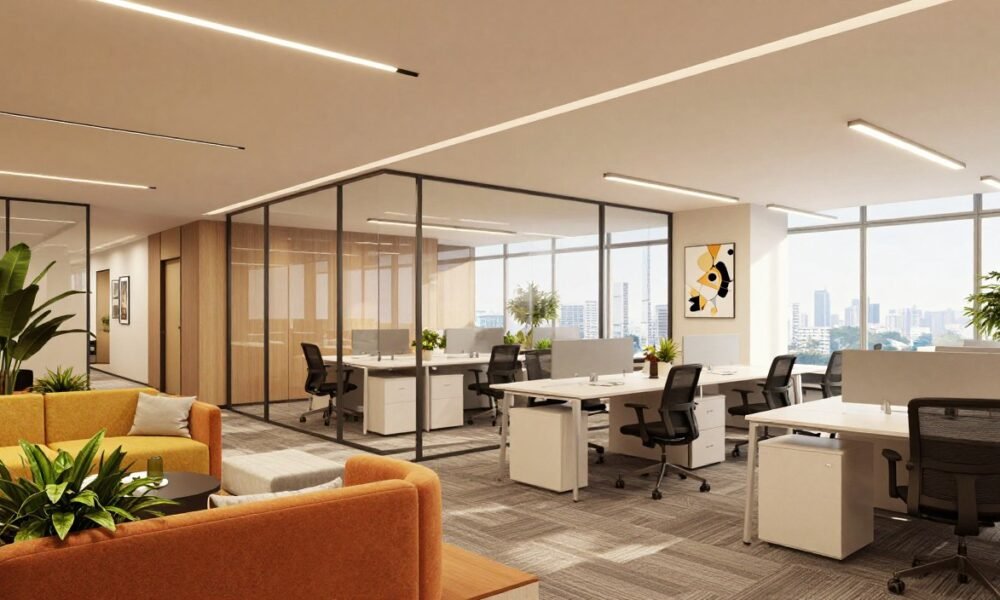
Stunning 3D Office Design Trends 2026
What if the place where you spend most of your waking hours could actually energize and inspire you?
The average adult spends over 50% of their daytime in a workspace. This makes it the central part of our day and often where we spend the most time in our life. That’s why, beyond just functioning well, we need an environment that feels pleasant and inviting.
With thoughtful planning, you can achieve both a functional and beautiful workspace. The right project starts with clear vision and creative ideas. This is where modern visualization tools become transformative.
We’re excited to explore the trends shaping 2026. These innovations go beyond aesthetics to impact team satisfaction, collaboration, and business success. From adaptive layout to well-being-focused interior elements, the future workspace is here.
Our team at Decoratr combines cutting-edge software with expert principles. We help you visualize perfect plans and floor arrangements before implementation. Ready to begin? Call us today to schedule a free consultation. Visit www.decoratr.in, email shailendra.bharadwaj@decoratr.in, or WhatsApp +91-7838900414 for quick queries about your workspace project.
Key Takeaways
- Adults typically spend over half their waking hours in a workspace, making its design crucial for well-being.
- Modern office environments must balance functionality with creating an inviting atmosphere.
- 3D visualization tools allow you to perfect your space before physical implementation.
- Thoughtful design directly impacts employee satisfaction, collaboration, and business success.
- Starting with clear objectives is the first step to a successful workspace project.
- 2026 trends focus on adaptive layouts and well-being-focused interior elements.
- Professional guidance can help transform your vision into a reality that your team loves.
Why 3D Office Design is Your Blueprint for Success
Imagine building your perfect workspace without ever moving a single piece of furniture. That’s the power of using a digital blueprint. This approach lets you experiment freely and make changes with a click.
You save valuable time and avoid costly errors by spotting issues early.
Traditional two-dimensional floor plans are essential for measurements. But they can leave your ideas feeling flat. Transforming that basic plan into a rich, virtual model changes everything.
Suddenly, everyone can see the final outcome. This shared vision is crucial for your project success.
Modern software makes this process incredibly simple. Platforms like Planner 5D let you draw clear plans in minutes from any device. You can then populate your virtual space with items from huge libraries.
Try multiple layout options. Rearrange furniture to improve traffic flow. See how light fills the room. This ability to test scenarios builds immense confidence.
You make better choices about space use and aesthetics before committing real resources.
The best part? You don’t need technical skills. User-friendly tools are designed for everyone. They help you convey your complete vision.
Sharing interactive images and models with your team or contractors streamlines collaboration. Feedback is immediate and clear.
Investing time in this virtual planning stage pays off massively. It leads to a more efficient build and a final result that truly supports your team’s life and work. Your real-world project becomes a realization of a vision you’ve already seen and perfected.
Foundational Principles of a High-Functioning Office Layout
Before selecting furniture or choosing colors, mastering these core layout concepts will transform your workspace. A great environment flows naturally and feels intentional.
These principles work for any project size. They create harmony between function and form.
Prioritizing Traffic Patterns and Flow
Think about how people move through your space. Natural pathways should remain clear and unobstructed.
Desks, chairs, and partitions must not block these routes. Analyze movement from entry points to common areas.
Keep generous clearance in front of doors and windows. This prevents bottlenecks and ensures safety.
Main space for main circulation routes. Your team should move freely without constant negotiation.
Creating Balance and Visual Weight
Visual balance makes a room feel stable and professional. It’s about distributing visual weight evenly.
Mentally divide your floor plan into four equal quadrants. Match the furniture’s visual impact across these areas.
A heavy desk on one side needs balancing elements opposite. This creates harmony throughout the space.
Balance feels intentionally designed rather than haphazard. It brings a sense of calm and order.
Establishing a Clear Focal Point
Every effective layout needs one central feature. This could be a reception desk, feature wall, or collaborative hub.
Place this most important element in a prominent position. It naturally draws attention and organizes the room.
All other arrangements relate to this focal point. Furniture placement becomes easier with this hierarchy.
The focal point gives your space purpose and direction. It guides both vision and movement.
These principles directly impact daily productivity and comfort. They apply to small home offices and large corporate floors alike.
Scale adapts but core ideas remain constant. Test different configurations using planning software.
Move elements around to find the most balanced, fluid arrangement. Your perfect layout awaits discovery.
Choosing Your 3D Office Design Software
With so many digital planning options available, finding the right one for your project can feel overwhelming. The perfect tool should match your skill level and project needs.
It should turn your ideas into clear visual plans everyone can understand. We’ll help you navigate the key differences between platforms.
Your choice impacts both the planning process and final results. Let’s explore what truly matters when selecting your visualization partner.
Key Features to Look For: From 2D Plans to AI Renders
Start with the basics. Any quality software should let you draw accurate two-dimensional floor plans. This foundation is crucial for measurements.
Look for intuitive drawing tools that don’t require technical training. The best platforms make this step simple and fast.
Next, check the 3D modeling engine. Can you easily convert your flat plan into a three-dimensional model? This transformation brings your project to life.
A robust library of items is essential. You need access to thousands of furniture pieces, fixtures, and decor options. Specific workplace items save you time.
Modern tools now offer something revolutionary. AI-powered photorealistic rendering creates stunning, lifelike images in minutes.
Platforms like MY3DPLANNER excel here. They generate visuals that look like professional photographs of your proposed layout.
This capability is a game-changer for presentations. It helps stakeholders visualize the final room with incredible clarity.
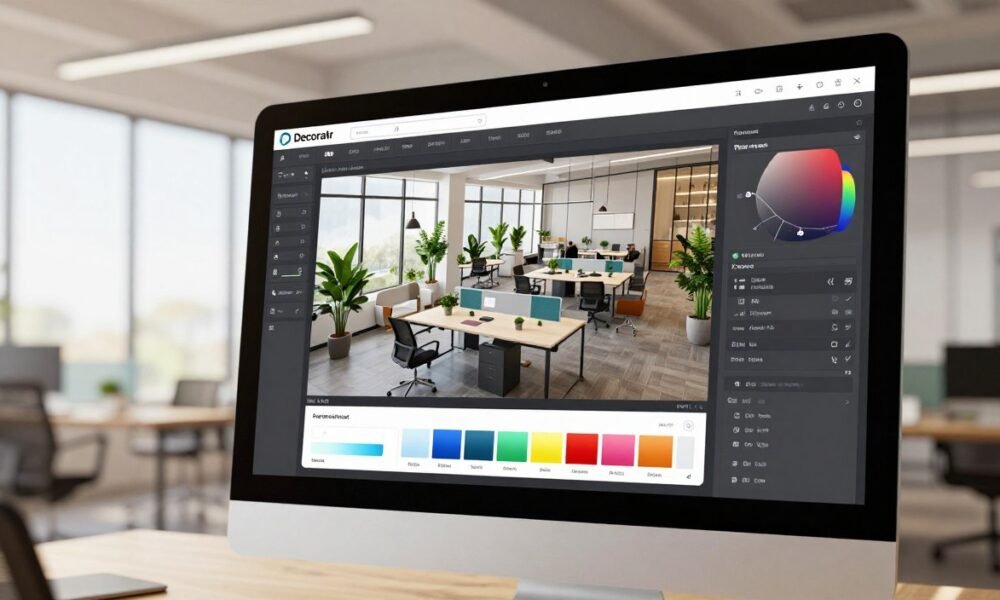
Cloud-Based Convenience vs. Specialized Software
You’ll encounter two main types of design software. Cloud-based platforms run in your web browser. Specialized programs are installed on your computer.
Cloud tools like Planner 5D offer major advantages. You can access your projects from any device with internet.
They receive automatic updates and have massive online libraries. Collaboration is easy since you can share links with your team.
The trade-off is needing a reliable internet connection. Your work is stored online rather than locally.
Specialized standalone software often provides deeper customization. It may work offline and handle more complex planning tasks.
However, these programs usually have a steeper learning curve. They can also be more expensive upfront.
Consider your specific needs carefully. How complex is your project? Do you need real-time collaboration features?
What’s your budget? Do you require cost estimation or integration with other business tools?
Many platforms offer free trials or limited free projects. This lets you test the interface before committing.
Always check output options. Can you export high-quality images, 3D files, and printable plans? This is vital for sharing with contractors.
Think about future scalability too. Some software offers white-label options for professional service offerings.
Your tool should grow with your needs. The right choice simplifies your entire office design journey from concept to completion.
Your Step-by-Step Guide to 3D Office Design
Transforming a blank canvas into a fully realized office environment is easier than you think with a clear roadmap. This process turns uncertainty into confidence. We’ll guide you through each phase, from initial idea to a shareable, professional plan.
Following these steps saves time and prevents frustration. You make informed decisions before any physical work begins. Let’s build your perfect workspace together.
Step 1: Define Your Objectives and Draw Your Floor Plan
Every great project starts with clear goals. Ask yourself key questions about your team’s size, work styles, and future growth. Consider your brand identity and the atmosphere you want to create.
These objectives become your planning compass. They guide every decision you’ll make about the layout and furnishings.
Next, create your base floor plan. Use your chosen design software to draw walls to scale. Accurately place windows, doors, and fixed elements.
You can start from scratch or upload an existing blueprint. This accurate foundation is crucial for all subsequent steps. It ensures your virtual model matches your real space.
Step 2: Experiment with Layouts and Furnishings
This is the fun part—your digital sandbox. Create multiple copies of your base plan. This lets you test different scenarios without losing your original work.
Compare an open office layout against one with defined rooms. Try various desk configurations and meeting area placements. See how traffic flows in each version.
Then, populate your favorite layout with virtual furniture. Pull items from the software’s extensive library. Focus on ergonomics, storage solutions, and creating collaborative zones.
This experimentation is risk-free. You discover the most efficient and pleasing arrangement for your specific office floor.
Step 3: Transform Your 2D Plan into a 3D Model
With your ideal floor plans set, bring them to life. Modern tools let you convert your 2D drawing into a three-dimensional model with a single click.
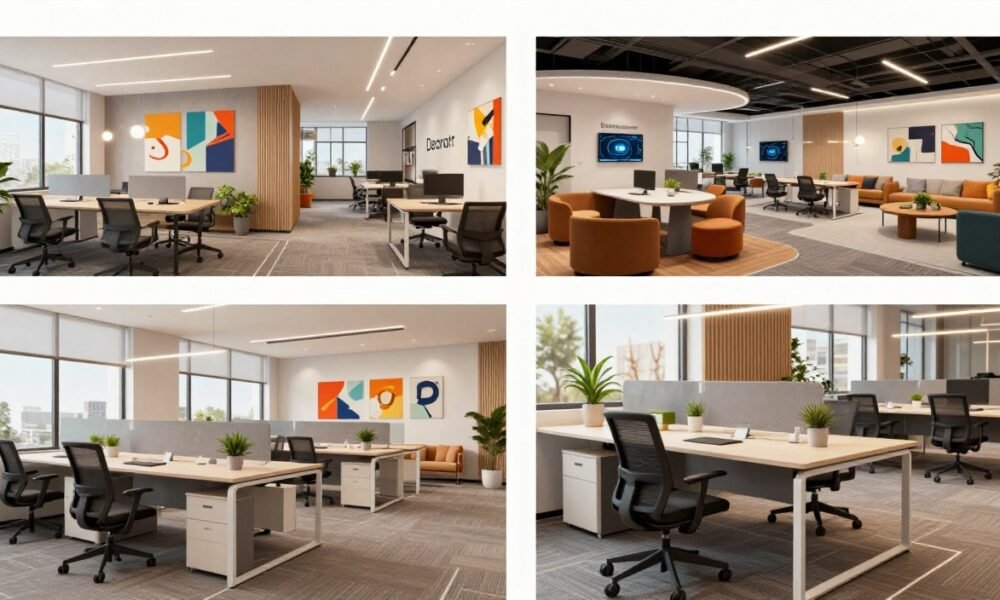
Suddenly, you can walk through the space. View it from every angle and truly feel its dimensions. This perspective reveals details a flat drawing cannot.
You see how light interacts with surfaces. You understand the scale of furniture within the room. This step turns abstract ideas into a tangible, immersive experience.
Step 4: Refine, Share, and Export Your Project
Now, refine your model. Adjust lighting, textures, and colors to match your aesthetic goals. Add decor elements that reinforce your brand and desired mood.
Then, share your vision. Get feedback from stakeholders by sending interactive views or stunning rendered images. Clear communication at this stage aligns everyone’s expectations.
Finally, export your work for implementation. Generate professional-quality floor plans, 3D files, and AI-powered renders. These give contractors everything they need for accurate, real-world execution.
This digital-first, iterative process is powerful. As RoomSketcher users note, it saves time and frustration by testing everything virtually first. It ensures your final office design aligns perfectly with your initial vision, minimizing costly real-world mistakes.
Incorporating 2026 Trends into Your 3D Design
As we look toward 2026, workspace trends are shifting from static arrangements to dynamic, human-centered ecosystems. These innovations respond directly to how modern teams actually work and thrive.
They blend flexibility with well-being in smart, practical ways. The best part? You can visualize and test every trend before making real commitments.
Modular and Adaptive Workspaces
Rigid, fixed layouts simply don’t work for today’s fluid projects. Modular systems offer the solution. Think of flexible furniture on wheels and movable partitions that reconfigure in minutes.
Your space can transform for different team sizes or project phases. A collaborative hub today becomes individual focus rooms tomorrow.
Using digital planning tools, you can test countless configurations virtually. See how movable walls affect sightlines and acoustics. Ensure your base infrastructure supports this flexibility.
Plan power and data access points strategically. They should accommodate various layout options without costly renovations later.
This adaptability future-proofs your investment. Your environment evolves alongside your business needs.
Biophilic Design for Well-being
Our connection to nature profoundly impacts how we feel and perform. Biophilic principles bring the outdoors inside through thoughtful elements.
Start with indoor plants—they’re not just decor. They improve air quality and reduce stress levels. Maximize natural light by planning window placement in your virtual model.
Incorporate natural materials like wood, stone, and bamboo. Even simulated water features or green walls can be visualized before installation.
These elements aren’t merely aesthetic. Studies show they boost creativity and cognitive function. Employees in nature-connected spaces report higher satisfaction.
Your digital plan lets you experiment with biophilic ideas risk-free. See how different arrangements affect the overall mood and style.
Planning for Hybrid Work Models
The modern workforce splits time between home and shared locations. Your physical environment must support both modes seamlessly.
Create dedicated zones for in-person collaboration. Think huddle rooms and video conferencing suites with excellent acoustics. Balance these with quiet focus areas for deep work.
“Hot-desking” areas efficiently serve rotating staff. These touchdown spaces need smart storage and easy technology access.
Plan your technology infrastructure carefully. Ensure seamless integration between remote participants and in-office team members. High-quality audio-visual systems are non-negotiable.
Every element should foster connection while respecting individual work rhythms. Your visualization projects help you find this perfect balance.
These trends represent more than passing fashions. They’re functional responses to evolving workforce needs. When implemented thoughtfully, they create environments where people genuinely want to work.
Blend these concepts with your company’s unique culture. Use visualization tools to see how they’ll function in your specific office floor plan.
The result? A workspace that attracts top talent and sparks continuous innovation. It becomes a tangible expression of your forward-thinking approach.
Bringing Your Vision to Life with Expert Guidance
The gap between a perfect virtual plan and a real, functioning workspace is where professional guidance makes all the difference. Modern software gives you incredible creative freedom. But transforming those digital ideas into a tangible, high-performing space benefits from seasoned expertise.
Our team at Decoratr bridges this crucial divide. We help you navigate from concept to completion with confidence.
Think of us as your strategic partners. We interpret your business goals, culture, and brand identity. Then we translate them into a cohesive physical environment.
This human insight is something design software alone cannot fully conceptualize. We see the bigger picture beyond the pixels.
Our process begins with your digital concept. We develop detailed technical specifications and material selections. Lighting plans are crafted to ensure both beauty and function.
Every choice supports your team’s daily life and work rhythm. The result is a layout that feels intentional and works flawlessly.
Consider the value comparison between going solo and partnering with experts:
| Aspect | DIY Planning Approach | Professional Guidance with Decoratr |
|---|---|---|
| Concept Development | Relies on software libraries and templates | Custom-tailored to your brand, culture, and workflow |
| Technical Execution | Basic plans may miss construction details | Detailed specs for contractors, ensuring build accuracy |
| Regulatory Compliance | Risk of overlooking local building codes | Expert navigation of all regulations and permits |
| Vendor Management | Time-consuming research and coordination | We manage relationships and timelines for you |
| Budget Optimization | Potential for cost overruns and value gaps | Access to trade materials and cost-effective solutions |
| Final Outcome | A good plan realized with some uncertainty | A great reality that exceeds expectations |
We bring deep experience with local building codes and vendor management. This reduces your stress and ensures a smooth build-out. Timelines become predictable rather than chaotic.
Our role extends to quality control on-site. We make necessary adjustments to perfect the final result. The virtual model becomes a living, breathing workspace your team loves.
Our consultation service complements your planning efforts perfectly. You might need a full-service package or just expert feedback on your ideas. We’re here to support you at any stage.
Leverage our knowledge of the latest products and sustainable materials. We help achieve a high-end look within your budget. Smart choices create lasting value.
Ready to move from plan to reality? Let’s have a conversation about your vision. We work as an extension of your team, dedicated to creating a workspace that truly brings your company’s vision to life.
📞 Call us today to schedule a free consultation. 🌐 Visit www.decoratr.in. 📧 Email shailendra.bharadwaj@decoratr.in. 📱 WhatsApp +91-7838900414 for quick queries about your project.
Conclusion
The right workspace doesn’t just happen—it’s carefully crafted through thoughtful planning and execution. Digital tools let you perfect your layout and furniture arrangements before any physical work begins. This saves time and prevents costly mistakes.
Follow the steps outlined: define clear goals, master core principles, choose the right software, and test future-forward ideas. Whether it’s a compact home setup or a large corporate floor, these methods work for any project.
A well-designed environment is an investment in your team‘s productivity and well-being. The returns far exceed the initial effort. You’re now equipped to create a functional, stylish space that supports success.
Ready to begin? Our team at Decoratr is here to guide you. 📞 Call us to schedule your free consultation. 🌐 Visit www.decoratr.in. 📧 Email shailendra.bharadwaj@decoratr.in. 📱 WhatsApp +91-7838900414 for immediate help with your workspace project.
FAQ
What software do you recommend for creating a professional office floor plan?
How can a 3D layout improve our team’s daily work life?
What are the first steps in planning a new office space project?
How do we incorporate modern trends like biophilic design into our plans?
Can these design programs help plan for a hybrid work model?
When should we seek expert guidance for our interior design project?


Construction Any Good?.
When you invest in construction — whether it’s for your dream home, school, or commercial space — one question always arises: “Is.

How Construction Is.
The construction and interior design industry is evolving faster than ever, and it’s no longer just about building structures — it’s about.