Transformative IT Office Interior Design Solutions
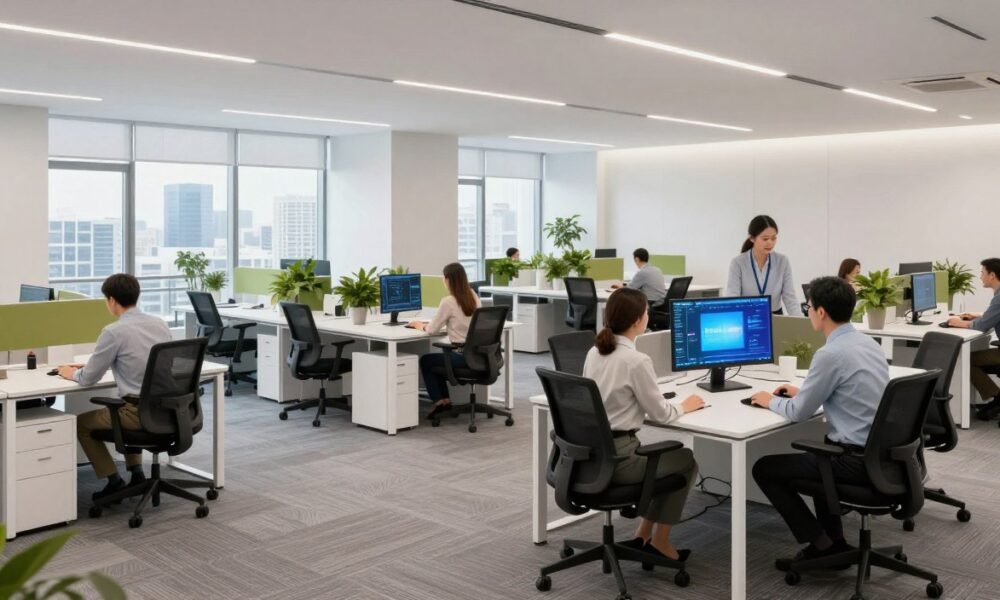
Can a rethought workspace boost hiring, speed up problem solving, and actually make teams happier?
We believe the answer is yes. Today, Indian tech firms are shifting from desks and screens toward experience-driven spaces that blend comfort, tech, and purpose.
Transformative means measurable gains in productivity, collaboration, and employee experience — not just a visual refresh.
Our approach aligns practical ergonomics, acoustics, lighting, zoning, and durable materials into one clear strategy. This fusion of planning, interiors, and smart tech creates a modern office that supports hybrid work and builds client trust.
We set expectations for a long-form, index-style guide: why change matters, core elements, 2025 trends, layouts, mood, materials, and our process. Mobile readability and width device-width responsiveness are part of the brief so leaders can review plans on phones.
Ready to plan? Call us for a free consultation: 📞 +91-7838900414. Visit our site at 🌐 www.decoratr.in or email 📧 shailendra.bharadwaj@decoratr.in.
Key Takeaways
- Transformative updates yield measurable boosts in productivity and retention.
- Blend ergonomics, acoustics, lighting, and materials into one coherent strategy.
- Follow an index-style plan for quick scanning and practical implementation.
- Modern workspaces support hybrid teams and improve client impressions.
- Ensure mobile-friendly plans with device-width and width considerations.
- Free consultations are available to kickstart planning and budgeting.
Why Experience-Driven Office Interiors Matter for IT Companies in India Right Now
A purposeful workspace removes friction so technical teams can focus and create. Experience-led planning reduces interruptions, clarifies circulation, and helps people share ideas faster.
How workspace design influences innovation, collaboration, and speed of problem-solving
Open collaboration zones paired with quiet areas support a flow from brainstorming to execution. Better acoustics and intuitive wayfinding cut cognitive load, letting teams move from idea to fix with fewer pauses.
Retention and engagement benefits of a welcoming, human-centric environment
When employees feel comfortable and have autonomy, engagement rises and turnover drops. Comfort and belonging are practical levers for hiring success in India’s competitive tech market.
Design as a visible expression of culture and brand identity for clients and employees
Entrance mood, material choices, and colour speak louder than a logo. A coherent company vision shows up in meeting areas and reception, signaling how teams work and what the brand values.
In short: experience is not luxury—it’s a measurable route to better productivity and retention. Once the “why” is clear, the next step is to define core elements of a modern workspace.
“Design that removes friction turns daily routines into competitive advantage.”
Key Elements That Define Modern IT Workspaces
Foundational features—ergonomics, sound control, and smart lighting—drive real gains in team output. We prioritise elements that affect daily comfort and productivity over purely decorative changes.
Ergonomics and comfort that sustain long screen-time schedules
We specify posture-friendly chairs and height-adjustable desks to reduce strain. Sit-stand setups and correct monitor heights lower fatigue and support longer focus sessions.
Smart lighting and acoustic planning to reduce distraction
Task lighting, glare control, and zoneable color temperature keep alertness high. Acoustic solutions—panels, soft finishes, pods, and quiet rooms—protect deep work without killing collaboration.
Color psychology for focus zones, idea rooms, and recharge areas
Use blue and green tones in focus bays for calm concentration. Warmer accents in idea rooms spark creativity. Neutral palettes help recharge areas feel restful between sprints.
- Meeting rooms are performance spaces: controlled lighting, sound-absorbing walls, and non-reflective surfaces for clear calls.
- Furniture choices should support posture and quick reconfiguration for hybrid work.
“Small choices in ergonomics, lighting, and acoustics deliver measurable productivity gains.”
Once these elements are set, we layer trends and tech to create a modern office that supports people and long-term goals.
IT Office Interior Design Trends for 2025 Across India
Trends for 2025 show Indian tech hubs moving toward hybrid-first, human-centered work environments.
Hybrid-first zoning uses activity-based planning: hot-desking neighborhoods, collaboration hubs, and quiet booths. Nasscom reports ~78% hybrid adoption, so flexible allocation is now baseline.
Biophilic moves focus on plants, green walls, daylight harvesting, and nature-inspired textures. IGBC notes these steps can lift productivity by up to 15%.
AI and IoT systems drive energy savings and utilization. CBRE India finds 45% of 2025 fit-outs include occupancy sensors, booking platforms, and smart climate controls.
Tech-integrated furniture adds wireless charging, height-adjustable workstations, and ergonomic seating. JLL reports 68% of employees felt more productive with digitally enabled furniture.
Acoustic innovation uses pods, baffle ceilings, felt partitions, and sound-absorbing wall features to protect focus without stopping collaboration.
Wellness zones like meditation rooms, nap pods, and standing meeting points boost engagement—Knight Frank links these features to a 22% rise in employee engagement.
| Trend | Key features | Impact | Data source |
|---|---|---|---|
| Hybrid-first zoning | Hot-desking, quiet booths, hubs | Better space use, flexible teams | Nasscom 2024 (~78%) |
| Biophilia | Plants, green walls, daylight | Up to 15% productivity lift | IGBC |
| AI & IoT | Sensors, booking, smart HVAC | Energy savings, utilization | CBRE India (45%) |
| Furniture & wellness | Wireless charging, nap pods | Higher productivity & engagement | JLL (68%), Knight Frank (22%) |
“We frame 2025 as the year Indian tech spaces become hybrid-first, human-centric, and tech-enabled.”
Workspace Layout Ideas That Keep Teams Flexible and Focused
Layouts that match daily rhythms help teams move quickly between heads-down work and group sessions. We present practical ideas that scale with team size, hybrid ratio, and project intensity.
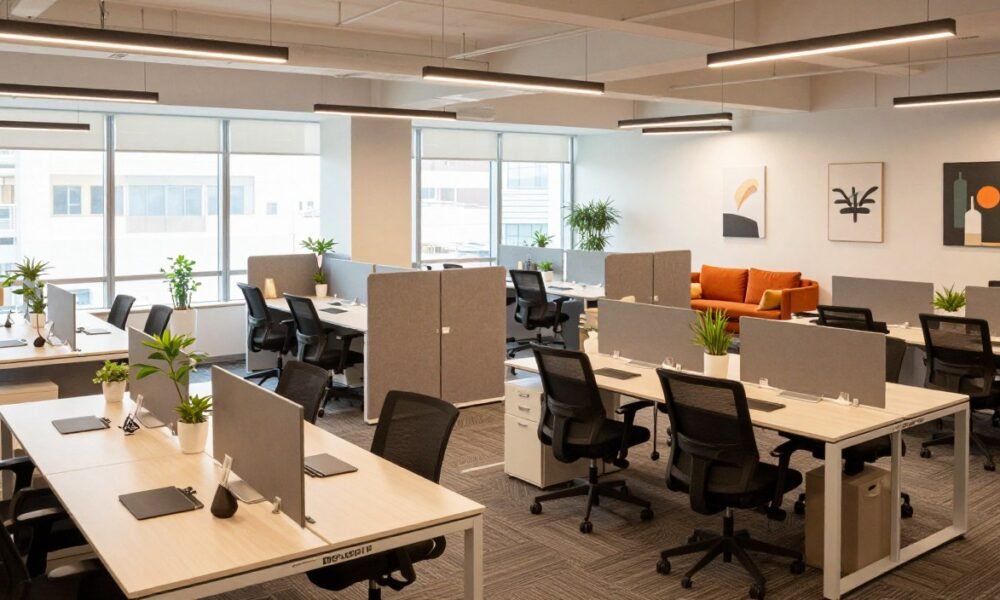
Open-plan collaboration zones that still protect privacy and concentration
Open-plan zones encourage communication and a flat team culture. To keep noise contained, we use partial walls, acoustic panels, and strategic adjacency so lively hubs never bleed into quiet coding areas.
Collision spaces—collaboration corners with writable walls and semi-open partitions—create quick sync points. Dedicated meeting points reduce the scramble for rooms and speed decision cycles.
Focus rooms and work pods that support high-cognitive tasks without isolation
Focus rooms and pods are essential for debugging, architecture reviews, and incident response. We keep them visible with glass sightlines so people avoid feeling cut off while staying quiet.
- Zoning principle: place deep-work areas away from pantry routes, reception paths, and high-traffic connectors.
- Video-call-ready booths: small rooms with good acoustics and camera-friendly lighting support hybrid collaboration.
Each layout choice links back to productivity and comfort so the plan supports real work patterns, not just looks. Next, we explore lighting, nature, and mood to lift performance further.
“Flexible planning makes space predictable and work more productive.”
Lighting, Nature, and Mood: Designing for Comfort Without Losing Performance
Smart daylight strategies and targeted fixtures set the tone for sustained focus and health. We plan natural light to lift mood and support long screen sessions while avoiding glare that causes eye strain.
Maximizing natural light with glare-aware planning
Large windows boost daylight but need glare control. We orient desks, add blinds or films, and place task lighting so screens stay readable.
Green walls, plants, and nature-inspired textures
Biophilic moves—green walls, potted plants, and tactile wood or stone finishes—reduce stress and tech fatigue.
These elements create calm sightlines that improve comfort and help teams recharge between sprints.
Layered lighting for rooms and zones
We specify layered lighting: bright, uniform task fixtures for coding bays; flexible scenes for meeting rooms; warmer ambient layers for lounges.
“Good lighting is performance work — it protects focus and extends usable hours.”
Practical note: balance looks with function so office interiors feel welcoming while supporting measurable productivity. Next, we pair lighting and greenery with durable, sustainable materials and finishes.
Materials and Finishes That Balance Aesthetics, Durability, and Sustainability
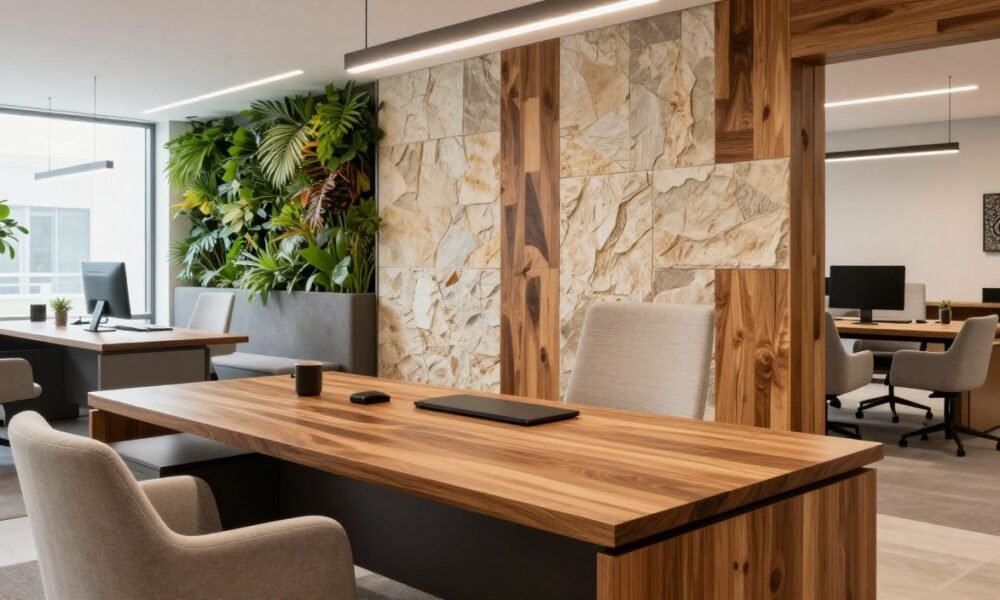
Choosing the right finishes can cut maintenance bills while lifting brand perception. Material selection affects total cost of ownership: durability, cleaning cycles, repairs, and how well surfaces endure heavy daily use.
Eco-friendly options that perform
Bamboo and recycled wood deliver warm visuals and fast renewability. Energy-efficient lighting reduces running costs and improves visual comfort for longer work sessions.
Blending materials for depth and care
Glass, wood, and metal layered together create a professional feel that welcomes clients and supports team rituals.
Textured wall panels add visual interest and reduce sound reflection in busy zones, improving acoustics without extra fixtures.
Practical choices by space
- High-traffic corridors: resilient, easy-clean finishes to retain look and lower repair cycles.
- Pantry and collaboration hubs: stain-resistant surfaces and warm-touch counters for comfort.
- Meeting rooms and lounges: mixed wood tones and soft textures for a durable, welcoming atmosphere.
Aligning materials with comfort and environment goals makes a space feel intentional. Thoughtful finishes silently communicate quality, stability, and attention to detail in any office interior design.
“Material choices are a long-term investment in performance, maintenance, and brand clarity.”
Next: once finishes are decided, our structured process turns those choices into a future-ready space through planning, tech integration, and brand alignment.
How We Turn Your Vision Into a Future-Ready Office Space
Our process turns abstract goals into a workspace that supports daily workflows and future growth.
Strategic space planning that supports collaboration without sacrificing comfort
We map adjacencies, circulation, and zoning so collaboration zones sit near meeting hubs while focus bays stay quiet. This balance preserves deep-work time and encourages quick syncs.
Technology integration for meeting rooms, booking, automation, and connectivity
We specify AV-ready meeting rooms, booking systems, occupancy sensors, and smart lighting. These features improve utilization and cut energy costs while making daily routines frictionless.
Brand alignment through colors, graphics, and experience-led entrance
We translate company culture into palettes, signage, and an experience-led reception that signals purpose. Consistent treatments strengthen employer branding and the user experience.
How we deliver
- Discovery and workplace strategy.
- Concept and detailed planning.
- Execution, commissioning, and handover support.
Measurable outcomes: better space utilization, fewer distractions, stronger employer branding, and higher productivity.
“We build scalable solutions so a growing team adapts without a full redesign.”
📞 Call us today to schedule a free consultation; 🌐 www.decoratr.in; 📧 shailendra.bharadwaj@decoratr.in; 📱 WhatsApp: +91-7838900414.
Conclusion
, A focused roadmap helps leaders pick ideas that match real work patterns and growth goals.
We sum up the central takeaway: the best office interior design is an experience system that balances focus, collaboration, and wellbeing within the same space.
Prioritise core elements first — ergonomics, acoustics, lighting, and color psychology — before surface upgrades. These choices drive creativity and improve productivity more than décor alone.
For 2025, plan hybrid-first zoning, biophilic interiors, smart features, acoustic innovation, and wellness amenities. Choose durable materials and layouts that fit culture, not fads.
Shortlist the ideas that match your team’s work style, then validate feasibility through professional space planning.
📞 Call us today to schedule a free consultation; 🌐 www.decoratr.in; 📧 shailendra.bharadwaj@decoratr.in; 📱 WhatsApp: +91-7838900414.
FAQ
What makes transformative IT office interior solutions different from standard workspace fit-outs?
How does workspace planning influence innovation and collaboration?
What retention and engagement benefits can companies expect from a human-centric environment?
How do we express company culture and brand through the physical environment?
Which elements define modern workspaces for high screen-time teams?
What are the major workspace trends for 2025 we should consider?
How can layouts stay flexible while protecting focus?
What lighting and nature strategies improve comfort without hurting performance?
Which materials balance aesthetics, durability, and sustainability?
How do you integrate technology for smarter meeting rooms and space use?
How does the process turn our vision into a future-ready workspace?
How can we schedule a consultation or get more details?

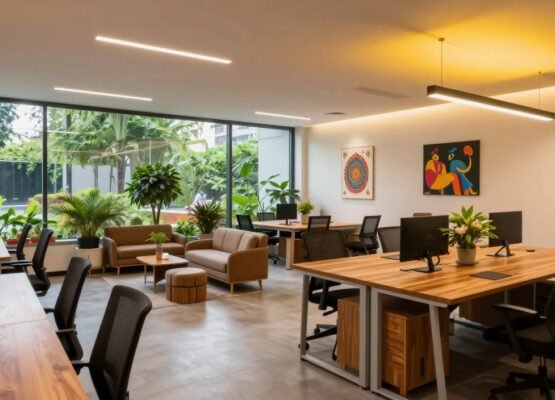
Stunning Office Interior.
What if your office isn’t “fine”—it’s quietly costing you focus, talent, and growth every single day? We offer office interior design solutions.
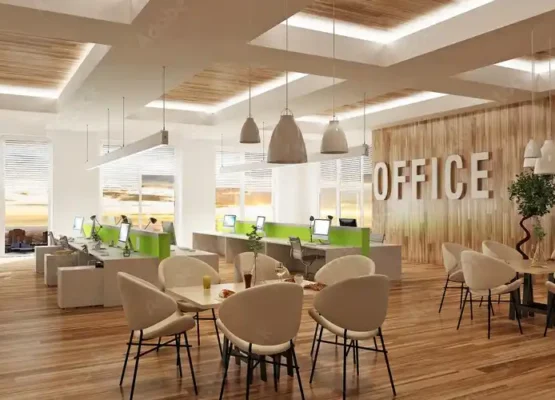
Designing Offices for.
Designing Offices for Startups: When launching a startup, your office design is more than just an aesthetic decision — it's a reflection.