
Office Interior Design for Businesses: A Complete Guide to Creating Inspiring, Productive Workspaces
In today’s fast-paced world, the right office interior design can make or break a company’s productivity, culture, and brand identity. Whether you’re launching a startup, running a law firm, leading a tech team, or managing a corporate office — the way your workspace is designed speaks volumes. This comprehensive, guide explores how to design offices tailored for different business types, cultivate a productive environment, reflect your brand in interiors, and stay ahead of trends.
Why Office Interior Design Matters
Before diving into specifics, it’s essential to understand why office interior design is more than just aesthetics. Thoughtful design:
- Enhances productivity and employee well‑being
- Reinforces corporate identity and brand values
- Supports different workflows and team dynamics
- Encourages collaboration and creativity
- Adapts to evolving business needs through flexible layouts
Ultimately, a well-designed office doesn’t just look good — it feels good to work in. That feeling translates into better focus, happier employees, stronger company culture, and improved performance.
Designing Offices for Startups
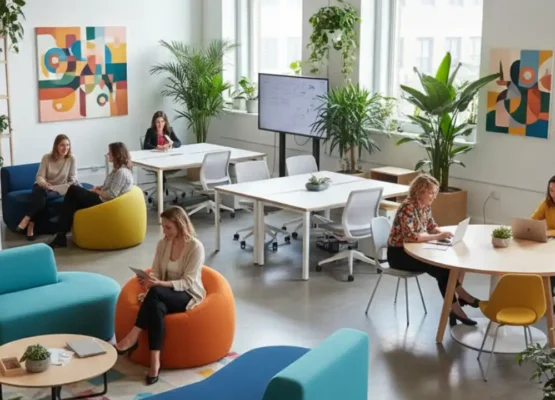
Startups often operate on tight budgets, with limited space and evolving team sizes. Designing offices for startups requires flexibility, adaptability, and a touch of youthful energy. Here’s how to approach it:
Embrace Flexibility from Day One
- Modular Furniture: Choose lightweight, reconfigurable desks and seating. Desks on wheels or foldable tables can quickly transform a conference area into a collaborative space or install new workstations when headcount increases.
- Multi‑Purpose Zones: Instead of dedicating separate rooms for every function (meeting room, lounge, quiet zone), design energy-efficient hybrid spaces. For example, a large table with comfortable seating can double as a brainstorming area, casual meeting spot, or lunch zone.
- Open Layouts: An open floor plan encourages communication, quick decision-making, and team cohesion — all vital for early-stage companies.
Infuse Startup Culture and Energy
- Color and Graphics: Use vibrant, bold colors — think teal, mustard, or even a graffiti wall. These colors energize spaces and mirror startup dynamism.
- Casual Furniture: Beanbags, communal sofas, high-top tables, or even a small coffee bar can foster informal collaboration and creative energy.
- Personalized Touches: Add writable walls (whiteboards or chalkboards) where employees can sketch ideas, share feedback, or simply doodle. It cultivates ownership and creativity.
Prioritize Cost‑Effective, Durable Materials
Budget constraints don’t mean sacrificing quality. Opt for surfaces and furnishings that are robust and easy to maintain — industrial-style tables, laminate desks, ergonomic chairs, and materials that resist wear and tear.
Example Layout for a 100 m² Startup Office
| Zone | Function | Furniture / Feature |
|---|---|---|
| Open Workspace | Day-to-day workstations | 6–8 desks, ergonomic chairs, power/data ports |
| Collaboration Area | Team meetings and brainstorming | Large communal table, moveable chairs, whiteboard |
| Lounge / Break Zone | Relaxation, casual chats, informal meets | Sofa or beanbags, coffee machine, small coffee table |
| Quiet Corner | Focused work, calls, private chats | Acoustic pods or sound-dampened corner with desk |
| Storage & Utility | Files, supplies, daily utilities | Lockers, shelves, recycling/waste bins |
This flexible, multi-functional setup allows startups to scale fast without redesigning the entire office.
How to Create a Productive Work Environment
No matter your business type, the environment you build dramatically influences productivity, engagement, and overall well‑being. Here are universal design principles to create a productive workspace:
Prioritize Natural Light and Indoor Air Quality
- Natural Light: Position desks near windows to maximize daylight exposure; use light, sheer curtains instead of heavy drapes. Daylight improves mood, reduces eye strain, and boosts energy.
- Air Quality & Ventilation: Ensure proper ventilation; consider adding indoor plants to improve air quality and reduce stress.
Ergonomics: Comfort Drives Productivity
- Adjustable Chairs and Desks: Provide supportive chairs and desks at proper heights. For teams with varied preferences, sit-stand desks can offer flexibility.
- Monitor and Screen Setup: Use monitor arms to adjust screen height, reducing neck strain. Provide enough desk depth to allow comfortable positioning.
- Lighting: Combine ambient lighting with task lighting. Use warm LED lighting (≈ 4000 K) to mimic daylight without glare.
Create Zones for Different Tasks
Not all work is the same — people need different spaces depending on what they’re doing:
- Focus Zone: Quiet, minimal distractions — dedicated for writing, coding, document review.
- Collaboration Zone: Open or semi-open area for group discussions, brainstorming.
- Break Zone: Informal space to relax, recharge, and socialize — essential for mental breaks and reducing burnout.
Acoustic Comfort: Balanced Noise Control
Use carpets, acoustic panels, or soft furnishings to dampen noise. For open offices, consider glass partitions or semi-private pods for phone calls and focused work without isolating employees completely.
Encourage Movement and Well-Being
Add elements that promote well-being: standing desks, dedicated corners for stretching or quick breaks, water stations, plants, or even a small treadmill desk. These small touches lead to healthier, more energized teams.
Office Interior Design for Law Firms
Law firms often demand sophistication, professionalism, and a sense of tradition. Their clientele expects a serious, polished environment. Designing offices for law firms involves balancing elegance, privacy, and functionality.
Timeless Materials and Colors
- Classic Materials: Rich wood finishes (walnut, mahogany), leather upholstery, polished stone or wood floors, and metal accents (brass, chrome) evoke tradition and reliability.
- Color Palette: Stick to neutrals — deep navy, charcoal, taupe, warm greys, with occasional deep green or burgundy accents for a refined feel. These colors convey stability and trust.
Privacy and Acoustics — Non-Negotiable
Legal work often involves confidential discussions and focus-intensive tasks. Prioritize privacy through closed rooms, soundproofing, double-glazed glass partitions, or heavy drapes. Individual offices for senior lawyers, quiet zones for paralegals — all contribute to confidentiality.
Formal Reception and Waiting Area
Create a reception area with a sophisticated lounge atmosphere: plush seating, elegant lighting (table lamps, dimmable sconces), a well-designed reception desk, and tasteful artwork. First impressions matter deeply in legal practices.
Scale with Functionality and Storage
- Ample Storage: Law firms generate paper-heavy workloads. Provide large cabinets, floor-to-ceiling built-ins, file rooms, and secure storage for confidential files.
- Efficient Meeting Rooms: Design meeting rooms with large tables, comfortable chairs, video conferencing facilities, and soundproofing to host client meetings and depositions.
Subtle Luxury and Branding
Incorporate subtle brand touches — such as a discreet plaque with the firm’s name, high-quality materials, or a signature color in upholstery or accent walls. Keep it classy, not flashy.
By combining elegance, privacy, and practicality, law firms can project authority and instill client confidence — through their interiors.
Best Office Interior Design Ideas for Tech Companies
Tech companies often thrive on innovation, collaboration, and fast-paced work. Their office designs should reflect agility, creativity, and future-readiness.
Open Layouts That Encourage Collaboration
Open-plan offices with minimal partitions encourage spontaneous collaboration and communication — essential for agile teams and cross-functional squads.
Huddle Rooms and Hot-Desking for Flexibility
- Huddle Rooms: Small rooms outfitted with writable glass walls, video-conferencing gear, and comfortable seating — ideal for quick syncs or brainstorming.
- Hot-Desking: Flexible desks that employees can use as needed; useful in environments with remote or hybrid teams, freelancers, or rotating shifts.
Creative, Playful Design Elements
- Informal Zones: Lounges with bean bags, game corners (table tennis, foosball), nap pods, or relaxation zones. Such spaces foster team bonding, encourage breaks, and stimulate creativity.
- Color & Graphics: Use bold colors, murals, geometric patterns — they energize spaces and align with a progressive, youthful brand identity.
Tech-integrated Workstations
Given the technology-centric nature of these companies, plan for:
- Dual‑monitor setups
- Plenty of power outlets and cable management
- High-speed internet infrastructure
- Conference rooms with large displays and remote-collaboration tools
Biophilic Design for Well-Being
Bring nature indoors with large potted plants, vertical green walls, natural wood finishes, and ample daylight. Biophilic elements are proven to reduce stress and boost creativity — perfect for tech environments.
Adaptive Furniture and Infrastructure
- Adjustable desks
- Mobile storage units
- Smart lighting and climate control — to adapt to different preferences and tasks quickly
By blending flexibility, modernity, tech-readiness, and a touch of fun, tech offices can become vibrant hubs of innovation.
Designing Offices for Creative Industries
Whether it’s design agencies, advertising firms, media studios, or art collectives — creative industries benefit from spaces that inspire, energize, and adapt to fluid workflows.
Flexible Zones for Dynamic Workflows
Creative work is seldom linear. Teams move from brainstorming to execution to review. Hence, design:
- Open Work Areas: Large communal tables for team ideation, collaborative work, and group editing.
- Creative Corners: Quiet or semi-private nooks for focused work, reflection, or solitary creativity.
- Studio / Workshop Spaces: If relevant — allocate space for photoshoots, prototyping, or mock-up development.
Visual Stimuli and Artistic Touches
- Inspiring Wall Art: Murals, graffiti-style paintings, rotating artwork by employees or local artists.
- Mood Boards and Inspiration Walls: Pinboards or whiteboard walls for brainstorming, sketching ideas, or mood collages.
- Mix of Materials: Combine raw concrete, exposed brick, natural wood, metal, and textiles for a raw yet intentional look.
Adaptive Furniture and DIY Spirit
Use second‑hand, repurposed furniture or modular pieces employees can reconfigure. This DIY vibe reflects the creativity at the company’s heart.
Lighting & Acoustics for Versatility
- Adjustable Lighting: Track lights, movable lamps, and dimmable fixtures cater to different tasks — from video editing to photography to brainstorming.
- Acoustic Balance: Use curtains, rugs, acoustic panels to absorb sound without stifling creativity or conversation.
Cultural & Community Vibes
Add communal kitchens, coffee bars, chill-out zones, or small libraries. Creativity thrives when people’re comfortable, relaxed, and free to exchange ideas casually.
By embracing flexibility, artistic expression, and collaborative layouts, offices for creative industries can energize teams, spark fresh ideas, and reflect the company’s ethos.
How to Use Branding in Office Interiors
Brand identity isn’t just for logos and websites — it should permeate your physical workspace as well. Smart use of branding in office interiors conveys culture, values, and professionalism.
From Visual Identity to Spatial Identity
- Color Palette: Extend your brand colors into wall paints, accent pieces, carpets, or furniture. For instance, if your brand uses teal and grey — use teal for accent walls or upholstery, grey for desks or partitions.
- Typography & Graphics: Use branded fonts and graphics — motivational quotes, company mission statements, guiding values — printed or painted on walls.
Signature Elements & Brand Symbols
- Logo Wall: A tasteful wall with your company logo — in reception or communal areas — reinforces brand presence.
- Custom Art or Murals: Commission art that reflects your brand story, vision, or core values.
- Branded Furnishings: Even small touches — like cushions, lampshades, mugs — can reflect brand identity.
Reflect Brand Personality Through Layout & Atmosphere
- Startup → Energetic & Casual: Bright colors, open layout, informal zones.
- Professional Services → Classic & Trustworthy: Dark woods, closed offices, calm lighting.
- Creative Industries → Bold & Free: Open plan, colorful & artistic, flexible furniture.
- Tech Firms → Dynamic & Futuristic: Minimalist design, tech integrations, flexible workstations.
Bring Brand Story to Life Through Spaces
Use meeting rooms, lounges, or breakout areas to tell your brand story — for example, naming rooms after company values, founding places, or brand milestones. These subtle cues reinforce a sense of belonging, culture, and identity.
How to Create a Flexible Workspace
Flexibility is the hallmark of modern office design. With hybrid work models, shifting team sizes, and evolving tasks, a flexible workspace ensures longevity and adaptability.
Modular Furniture & Equipment
- Use desks and tables on wheels for easy reconfiguration.
- Opt for stackable chairs, foldable tables, convertible furniture (e.g., desks that turn into meeting tables).
- Use mobile storage units to rearrange storage depending on changing needs.
Zoning Without Permanent Walls
- Curtains, Glass Partitions, or Sliding Panels: These allow you to create private spaces when needed — for meetings or quiet work — while preserving openness when not in use.
- Mixed-use Zones: A lounge can double as a casual meeting space, dining area, or an informal brainstorming zone.
Hot-Desking & Shared Spaces
With fewer fixed desks and more shared workspaces, employees can choose where to work based on task urgency, mood, or collaboration needs.
Infrastructure for Change
Plan power outlets, networking ports, lighting, and ventilation in such a way they don’t depend on a fixed layout. Use floor boxes or ceiling-mounted services instead of relying solely on walls.
Encourage Mobility & Collaboration
Incorporate writable walls, portable monitors, standing desks, and informal chat zones. The office becomes dynamic — aligning with creative thinking, spontaneous teamwork, or quick stand-ups.
Office Design Ideas for Corporate Offices
Large corporations often need balance — combining professionalism, brand consistency, employee comfort, and scalability.
Consistent Brand Implementation
Corporate offices benefit from consistent application of brand colors, logos, and design language across all floors and departments. That fosters a unified identity and reinforces brand culture.
Departmental Zoning with Purpose
Divide the office into functional zones:
- Executive offices & boardrooms — for leadership and high-stake meetings
- Workstations — for teams, cubicles or open-desks depending on culture
- Collaboration hubs — for cross-team projects, workshops, or training
- Break areas & cafeterias — to encourage rest and informal interaction
- Reception & waiting areas — professional and welcoming
Balanced Aesthetics: Professional but Comfortable
- Neutral color schemes: muted tones like greys, off-whites, navy, steel — evoke professionalism and don’t distract.
- Quality Materials: glass, steel, stone, veneered wood — stand up to heavy use while maintaining a clean look.
- Comfort Features: ergonomic chairs, adjustable desks, acoustic insulation, ample storage — make everyday work sustainable.
Incorporate Wellness & Modern Amenities
Large offices should factor in employee health and work-life balance:
- Greenery & Biophilic Design: indoor plants, green walls, or views to outdoors — reduce stress and boost satisfaction.
- Quiet Rooms / Phone Booths: small pods for calls, deep focus, or privacy.
- Lactation Rooms, Prayer Rooms, Wellness Rooms: depending on workforce diversity, inclusive amenities foster belonging.
- Cafeterias / Break Rooms: encourage communal eating and casual interaction.
Scalable Infrastructure & Standardization
Plan wiring, HVAC, lighting, and network infrastructure to support expansions or departmental shifts. Use standardized modular setups — so moving desks, adding rooms, or reconfiguring zones becomes frictionless.
Integrating Technology in Office Interiors
Technology isn’t just for laptops or servers — it’s embedded into modern workspaces, and integrating it seamlessly into interior design is crucial.
Smart Infrastructure & Cabling
- Underfloor Trunking / Floor Boxes: keeps cables hidden and prevents clutter.
- Ceiling-mounted Power/Data Tracks: especially useful for movable desks or hot-desking zones.
- Wireless Solutions: high-speed Wi-Fi, strong signal coverage, and secure connectivity for mobile devices.
Conference Rooms & Collaboration Tech
- Video conferencing setups — cameras, microphones, large displays.
- Interactive whiteboards or writable glass walls for hybrid brainstorming.
- Booking systems for meeting rooms — screens outside rooms showing availability.
Smart Lighting, Climate, and Climate Control
- Sensors and smart lighting systems that adjust based on occupancy or daylight.
- Smart HVAC for energy-efficient climate control, adapting temperature/humidity per zone.
- Integrated shading systems to reduce glare and manage natural light.
Tech-Ready Workstations
- Desks designed with cable management, power/data ports, monitor arms.
- Docking stations or universal ports to support laptops, dual monitors.
- Modular furniture that supports plug-and-play setups.
Wellness Tech Integration
- Air quality monitors, humidity sensors, smart ventilation.
- Smart desks — with sit/stand functionality, memory presets, ergonomic alerts.
- Noise-canceling zones or sound‑masking systems to support focus.
By thoughtfully integrating technology into interiors — not as an afterthought but as a core design consideration — you build a workspace ready for today’s demands and future innovations.
The Future of Office Interior Design
As work evolves, so do the spaces we inhabit. Here are emerging trends shaping the future of office interior design:
Hybrid Work & Remote‑Ready Layouts
With hybrid work models becoming standard, offices will need:
- Multi‑use Spaces: collaboration zones, quiet pods, hot‑desks for intermittent office visits.
- Bookable Workstations: employees reserve desks when coming in; layout adapts dynamically.
- Drop-in Meeting Pods: for remote-first teams to gather occasionally — flexible, small‑footprint rooms equipped with tech.
Emphasis on Wellness & Biophilic Design
Health and well‑being will remain central:
- Green Walls & Indoor Gardens: to combat stress, improve air quality, and boost happiness.
- Natural Materials & Light: more wood, stone, natural fabrics, and daylight-focused layouts.
- Wellness Rooms: for meditation, rest, or quiet focus.
Sustainable & Eco‑Friendly Design
As companies commit to ESG (environmental, social, governance) goals:
- Use recycled or sustainably sourced materials.
- Choose energy‑efficient lighting, appliances, and climate systems.
- Optimize layouts for energy conservation (e.g., daylighting, shading, automated lighting/heating).
Smart Offices & IoT Integration
Offices will get digitally intelligent:
- Sensors for occupancy, lighting, temperature, air quality.
- Automated desks, lighting, and climate control.
- Analytics on space usage — enabling reconfiguration for optimal utility.
Personalization Meets Flexibility
- Customizable Workspaces: employees choose lighting, temperature, furniture configuration per preference.
- Hybrid Zones: spaces that shift — from silent focus rooms to collaborative hubs, depending on demand.
- Modular Interiors: furniture and partitions that can be rearranged or replaced easily, extending the lifespan of interiors.
Looking ahead, offices will be more adaptive, sustainable, health-conscious, and tech-integrated than ever — acting as flexible environments that support human needs, business efficiency, and social responsibility.
Bringing It All Together — Strategy for Your Business
So, how do you approach designing or redesigning your office interior — whether you run a startup, a law firm, a tech company, or a large corporation? Here’s a step-by-step roadmap:
- Define Purpose & Culture
Clarify what you want your office to say about your company — energetic and creative (startup), professional and trustworthy (law firm), innovative and agile (tech), or stable and efficient (corporate). - Audit Functional Needs
List roles, workflows, team sizes, collaboration patterns, privacy needs, storage requirements, and technology dependencies. - Design the Layout with Zones
Based on needs: open workspaces, private offices, meeting rooms, lounge zones, quiet spaces, pantry / break rooms — with flexibility in mind. - Select Materials, Colors & Furniture Accordingly
Match them with your brand identity and desired atmosphere — modern and minimal, classic and refined, playful and creative, or practical and corporate. - Integrate Technology Seamlessly
Plan for cabling, power outlets, network infrastructure, meeting-room tech, and smart systems. - Focus on Ergonomics & Well‑Being
Use adjustable furniture, natural light, acoustics, greenery — design for employee comfort and health. - Build in Flexibility for Growth
Choose modular, reconfigurable furniture and infrastructure so your space can evolve with your company. - Reflect Brand Identity Through Design
Use brand colors, logos, custom art, and subtle design cues to express company values and culture. - Plan for the Future
Adopt sustainable materials, energy-efficient systems, hybrid-work setups, and digital flexibility to future-proof your space. - Iterate and Evolve
Solicit employee feedback, monitor how spaces are used, and adjust layouts, furniture, and zones accordingly. A good office evolves with its people.
Conclusion
Office interior design isn’t just decoration — it’s a strategic tool to shape company culture, drive productivity, communicate brand identity, and support evolving business needs.
Whether you’re designing offices for startups, law firms, tech companies, creative agencies, or corporate offices, the same core truths apply: prioritize comfort, flexibility, identity, and functionality. By integrating natural light, ergonomic furniture, smart layout zoning, appropriate materials, brand visuals, and technology infrastructure, you can build spaces that not only look good — but genuinely feel right.
Looking ahead, offices will increasingly become flexible, hybrid-ready, eco-conscious, and tech-integrated environments that adapt to each business’s rhythm. Embrace that future now, and you’ll set a firm foundation for growth, productivity, and cultural strength.
Read More:-
Find the Best Interior Designers in Gurgaon: Your Complete Guide to Premium Design Services
Best Interior Designer in Delhi NCR – Why Decoratr is a Trusted Choice for Schools, Offices & Homes
Best Interior Designers in Ghaziabad
Top Interior Designers in Noida: Elevate Your Space
Hire the Best Interior Designer in Noida for Your Home
How to Create a Productive Work Environment
Office Interior Design for Law Firms
Best Office Interior Design Ideas for Tech Companies
Designing Offices for Creative Industries
How to Use Branding in Office Interiors

Designing Offices for.
If you walked into a bank in the 1990s, you likely saw rows of beige cubicles, fluorescent lights, and serious faces. Now,.

Office Interior Designers.
Looking to boost team output and make a stronger brand impression — without guesswork? Our commercial workspace teams deliver measurable productivity gains,.