
Integrating Technology in Office Interiors: Creating a Future-Ready Workspace
Integrating Technology in Office Interiors: As technology continues to evolve, its integration into office interiors has become essential for creating a modern, efficient, and dynamic work environment. Today, technology is no longer just a tool; it has become a fundamental part of office design. The modern workplace needs to be adaptive, collaborative, and connected, allowing employees to work efficiently whether in the office, at home, or on the go. Integrating the right technology into office interiors can not only enhance employee productivity but also improve the overall work experience, foster collaboration, and increase operational efficiency.
In this article, we will explore how technology can be seamlessly integrated into office interiors and how businesses can create a technology-driven workspace that boosts both employee satisfaction and company performance.
1. Smart Office Technology: The Backbone of Future Workspaces

The concept of a “smart office” is rapidly gaining traction, with advancements in technology enabling businesses to optimize everything from lighting to heating, security, and even desk availability. A smart office uses a network of connected devices and systems to create a more efficient, comfortable, and responsive workspace.
Key Smart Technologies to Integrate:
- Smart Lighting: Smart lighting systems adjust based on occupancy, time of day, or natural light levels, helping to conserve energy and create the ideal lighting conditions for work. Employees can use sensors or smartphone apps to control the brightness or color temperature to suit their preferences.
- Climate Control: Using smart thermostats and automated climate control systems, offices can maintain comfortable temperatures in different zones, adjusting based on room occupancy or time of day. This not only increases comfort but also improves energy efficiency.
- Smart Desk Systems: Integrating technology into workstations with adjustable desks that employees can raise or lower with the push of a button can promote ergonomic health and productivity. Additionally, some smart desks have built-in charging stations and even wireless charging capabilities, ensuring devices remain powered up throughout the day.
- Energy-Efficient Appliances: From coffee machines to air purifiers and office printers, integrating energy-efficient appliances with smart features that monitor usage can significantly reduce the office’s environmental impact and lower utility costs.
By implementing smart technology, businesses create an office that’s not only more efficient but also more responsive to the needs of the employees, enhancing their overall experience.
2. Collaborative Technology: Enhancing Communication and Teamwork
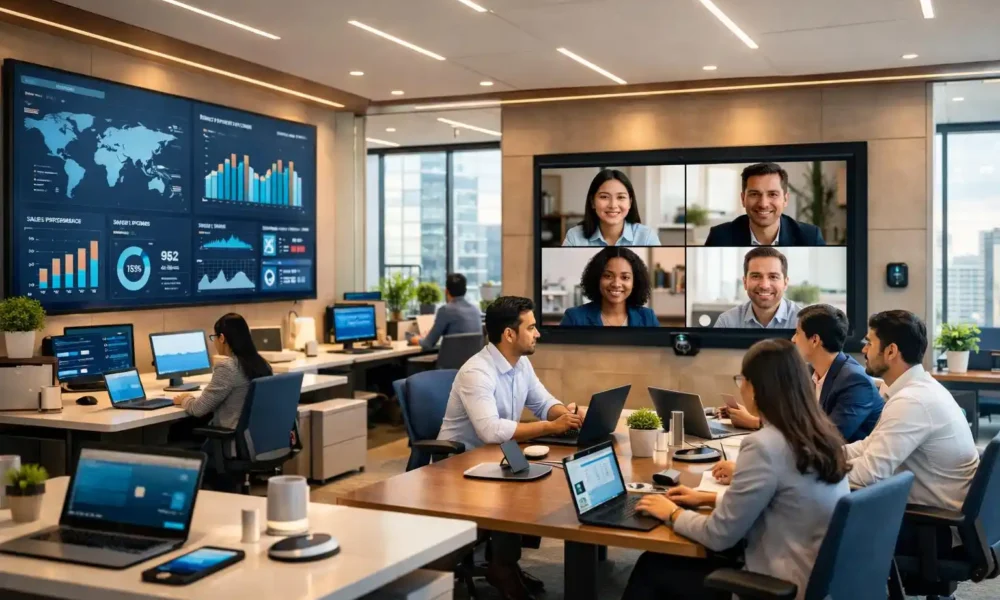
Collaboration is at the heart of today’s work culture, especially with the rise of hybrid and remote work. To foster teamwork and improve communication, office interiors must integrate technology that allows seamless interaction between in-house and remote employees.
Technology Solutions for Collaboration:
- Video Conferencing Tools: High-quality video conferencing equipment is essential for connecting hybrid teams. Investing in large screens, microphones, and cameras can ensure that remote employees can participate in meetings as if they were physically present. Video conferencing tools like Zoom, Microsoft Teams, or Google Meet should be integrated into the office’s meeting rooms with automated features such as booking systems or one-touch meeting start.
- Interactive Whiteboards: Interactive digital whiteboards allow teams to brainstorm and share ideas in real time, regardless of their physical location. These smart boards can be used for collaborative project planning, remote meetings, and presentations, making them ideal for creative teams or any business requiring constant brainstorming and innovation.
- Collaboration Platforms: Software like Slack, Asana, or Trello can be used to manage tasks, communicate instantly, and track projects. These platforms can be integrated into your office environment, providing employees with easy access to the tools they need to stay on top of tasks and collaborate with team members.
- Screen Sharing and Projection Technology: For meetings or presentations, investing in high-quality projectors or screen-sharing systems can enhance collaboration. Employees can easily share their screens during discussions, making it easier for teams to visualize concepts, data, or creative work.
By providing the right technology for collaboration, businesses can ensure that teams remain connected, productive, and efficient, regardless of their location.
3. Ergonomics and Employee Well-Being: Integrating Technology for Comfort
As more research highlights the importance of employee well-being, integrating technology that supports ergonomics and mental health is becoming a priority for many companies. A healthy, comfortable employee is more productive, happier, and more likely to stay engaged in their work.
Tech-Enabled Ergonomic Features:
- Height-Adjustable Desks: These desks allow employees to switch between sitting and standing, promoting better posture and reducing the negative effects of sitting for long periods. Some models come with built-in reminders to adjust the desk’s height throughout the day, ensuring employees are constantly reminded to take movement breaks.
- Ergonomic Accessories: Tools like keyboard trays, laptop stands, and mousepads with wrist support can help employees maintain ergonomic posture while working. Integrating technology such as adjustable desks or standing desks ensures employees have the flexibility to create an ideal workspace tailored to their needs.
- Noise-Canceling Technology: Acoustic treatments and noise-canceling headphones can help employees concentrate in open-plan offices or noisy environments. Soundproofing materials, such as acoustic panels or carpets, can also be used in meeting rooms to prevent distracting background noise.
- Smart Lighting for Well-Being: Lighting can have a significant effect on an employee’s health. Studies show that exposure to natural light can improve mood and productivity, while artificial lighting can lead to eye strain and headaches. Smart lighting systems that adjust to the time of day and mimic natural sunlight patterns can support employee well-being by promoting circadian rhythms and reducing fatigue.
By integrating ergonomic technology and promoting well-being through smart design, businesses can create a work environment that enhances comfort and reduces health risks.
4. Sustainable Technology: Building Eco-Friendly Workspaces
Sustainability has become a key priority for businesses as environmental awareness increases. The future of office design incorporates eco-friendly technologies that reduce the office’s carbon footprint and energy usage.
Sustainable Tech Solutions:
- Energy-Efficient Systems: Investing in LED lighting, energy-efficient HVAC systems, and smart thermostats can significantly reduce energy consumption in the office. These systems can be monitored and controlled remotely to optimize energy usage, making it easier to cut down on waste and lower utility bills.
- Recycling Stations and Waste Management Technology: Implementing technology for waste management, such as sensor-based bins that monitor waste levels and sort materials for recycling, can help offices reduce their environmental impact. Digital signage or apps can also be used to encourage employees to recycle and minimize waste.
- Sustainable Building Materials: When designing or renovating office interiors, use sustainable materials like bamboo, recycled wood, or low-VOC paints to reduce environmental harm. Smart construction techniques and materials that conserve energy or reduce waste will become standard as sustainability becomes a greater priority for businesses.
Sustainable office design reduces environmental impact while also aligning with the values of employees and clients who are increasingly concerned about corporate responsibility.
5. Smart Office Systems for Seamless Operations
Integrating technology into office interiors also includes systems that improve the overall functionality and efficiency of the workspace. A smart office system connects various devices and tools, allowing for centralized control and automation, making daily operations more seamless.
Examples of Smart Office Systems:
- Automated Room Scheduling: Digital room booking systems allow employees to reserve meeting rooms and conference areas in real time. These systems can sync with employees’ calendars, ensuring that meeting spaces are efficiently used and reducing the chance of scheduling conflicts.
- Visitor Management Systems: Technology can be used to manage visitor check-ins, replacing traditional sign-in methods with digital kiosks or apps. These systems can streamline the process, enhance security, and ensure that visitors are seamlessly directed to the appropriate meeting room.
- IoT-Connected Devices: Internet of Things (IoT) technology allows devices within the office — from printers and coffee machines to security cameras and lights — to be connected and controlled remotely. These devices can communicate with each other, improving workflow and reducing operational costs.
By implementing smart systems, businesses can create a more efficient, user-friendly office environment that enhances employee experience and simplifies daily tasks.
6. Interactive and Customizable Workstations
As companies continue to embrace flexibility in the workplace, customizable workstations are becoming more common. These stations allow employees to adjust their workspaces to meet their specific needs, making them an essential part of a modern office design.
Features of Customizable Workstations:
- Modular Furniture: Modular desks, chairs, and storage solutions enable employees to tailor their workspaces to suit their tasks. Modular systems also allow businesses to adjust office layouts quickly as team structures change or as the business grows.
- Personalization Technology: Employees can integrate technology that allows them to customize their workspace digitally. For example, they could adjust their chair height, lighting, or temperature preferences using an app or a smart system.
- Touchscreen Desks: Interactive desks with built-in touchscreen capabilities can be used for collaboration, presentations, or even as workstations for quick data entry. These desks can serve as both functional workstations and interactive spaces for brainstorming or presentations.
Providing employees with customizable workstations gives them the flexibility to design their workspace for maximum productivity and comfort.
Conclusion
Integrating technology into office interiors is no longer optional — it’s essential for creating a modern, efficient, and engaging workspace. From smart lighting systems to video conferencing tools and ergonomic furniture, the right technology can enhance communication, collaboration, and employee well-being. As businesses continue to evolve, the future of office interiors will rely heavily on technology to create a more connected, flexible, and productive environment.
By embracing these technological advancements and integrating them into your office design, you not only create a more efficient and sustainable workplace but also ensure that your business stays ahead in an increasingly digital world. With the right mix of innovation, technology, and design, you can build a future-ready office that fosters success for both employees and the company as a whole.
Read More:-
Office Interior Design for Businesses
Top Interior Designing Firms in Noida
Top Interior Designers in Noida: Elevate Your Space
Hire the Best Office Interior Designer in Noida
How to Create a Productive Work Environment
Best Interior Designer in Delhi NCR – Why Decoratr is a Trusted Choice for Schools, Offices & Homes
Top Interior Designers & Architects in Ghaziabad
Designing Offices for Startups: Creating a Dynamic and Productive Workspace
Top Interior Designing Firms in Noida
Office Interior Design for Businesses: A Complete Guide to Creating Inspiring, Productive Workspaces
Find the Best Interior Designers in Gurgaon: Your Complete Guide to Premium Design Services

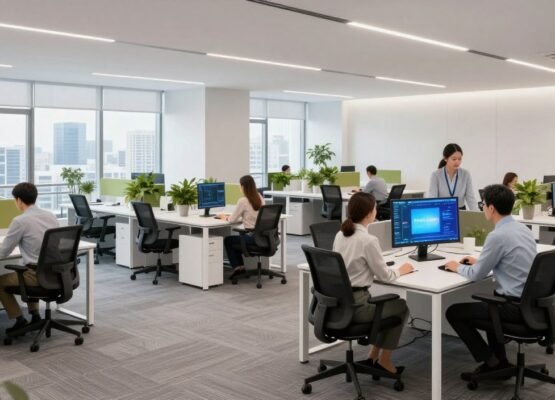
Transformative IT Office.
Can a rethought workspace boost hiring, speed up problem solving, and actually make teams happier? We believe the answer is yes. Today,.
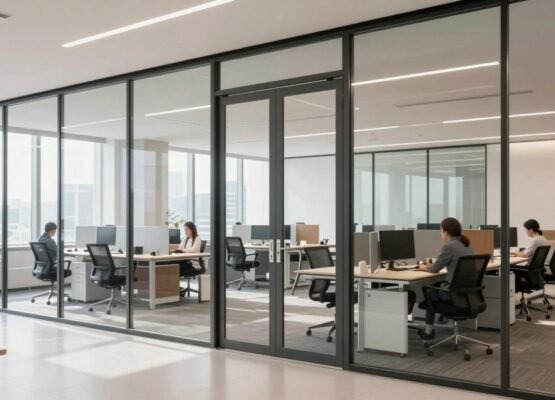
Office Glass Door.
The right office glass door design can dramatically transform a workspace, creating an atmosphere of openness while maintaining functionality. Glass doors have.