
Office Glass Door Design: Transforming Modern Workspaces
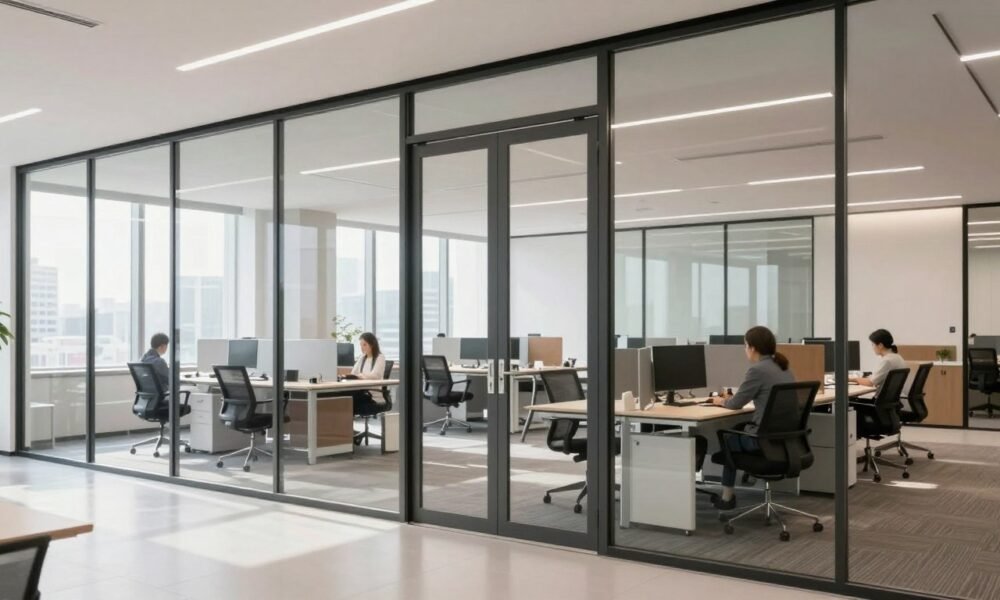
Benefits of Glass Doors in Office Design
Incorporating glass doors into your office design brings numerous advantages that impact both the aesthetic appeal and functionality of your workspace.
Enhanced Natural Light
Glass doors allow sunlight to penetrate deeper into interior spaces, reducing the need for artificial lighting. This natural illumination creates a more inviting atmosphere and can significantly improve mood and productivity among employees. Offices with abundant natural light report higher employee satisfaction and reduced eye strain.
Visual Connectivity
While providing physical separation, glass doors maintain visual connection between spaces. This transparency promotes a sense of openness and collaboration, allowing team members to see when colleagues are available for discussion. The visual access also helps managers maintain awareness of team activities without disrupting workflow.
Space Optimization
Glass doors create the illusion of more space, making smaller offices appear larger and more open. Sliding glass door designs are particularly effective in space-constrained environments, eliminating the need for clearance space required by traditional swinging doors. This space efficiency is crucial in urban offices where square footage comes at a premium.
Professional Aesthetics
Glass doors project a modern, professional image that impresses clients and visitors. The sleek, contemporary look of glass complements various design styles and can be customized to align with your brand identity through frosting, tinting, or decorative elements.
Acoustic Solutions
Modern glass door systems can be designed with acoustic properties that reduce noise transmission while maintaining visual transparency. Double-glazed options provide superior sound insulation for meeting rooms and private offices where confidential discussions take place.
Adaptable Privacy
Today’s glass door designs offer various privacy options, from completely transparent to frosted or smart glass that can switch from clear to opaque with the touch of a button. This adaptability allows spaces to transform based on changing needs throughout the workday.
Popular Office Glass Door Design Types
The market offers diverse glass door options to suit different office layouts, functional requirements, and aesthetic preferences. Each type brings unique advantages to your workspace design.
Frameless Glass Doors
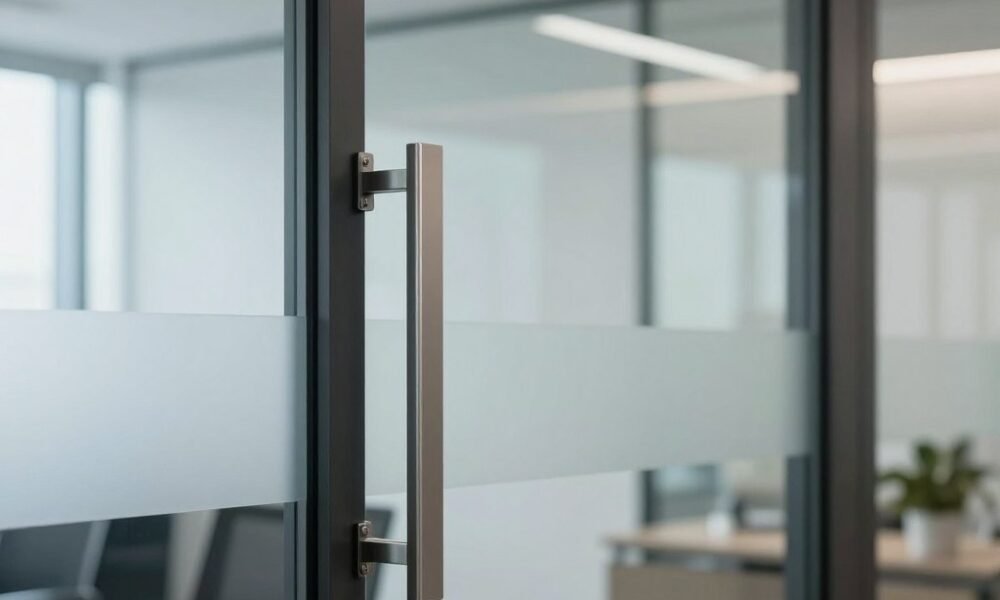
Frameless glass doors create a seamless, minimalist aesthetic that maximizes transparency and light flow. Without visible frames, these doors appear to float within the space, offering an ultra-modern look that’s particularly popular in high-end office environments.
Advantages
- Sleek, minimalist appearance
- Maximum transparency and light transmission
- Creates an impression of spaciousness
- Contemporary aesthetic that impresses clients
Considerations
- Higher price point than framed options
- Requires precision installation
- May need more frequent cleaning to maintain appearance
- Less effective for sound insulation without special treatments
Sliding Glass Doors
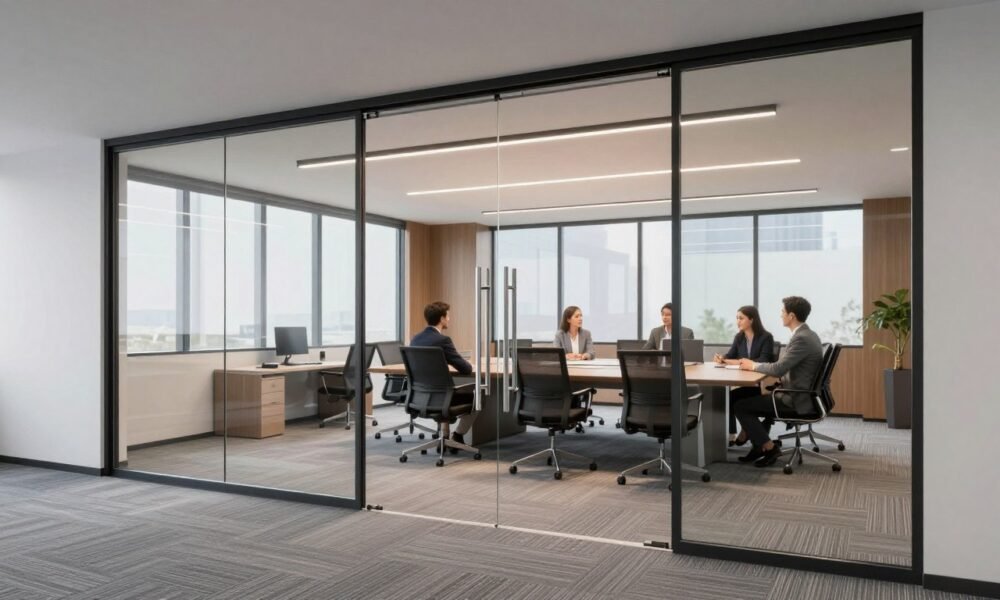
Sliding glass doors are ideal for space-constrained offices, as they don’t require swing clearance. These doors slide along tracks, making them perfect for areas where traditional hinged doors would be impractical. Modern sliding systems offer smooth, quiet operation with various mounting options.
| Sliding Door Type | Best For | Space Requirement | Privacy Level |
| Single Panel | Small to medium doorways | Wall space equal to door width | Medium to high (depends on glass type) |
| Bypass (Multi-panel) | Wider openings, conference rooms | Minimal wall space needed | Medium to high |
| Areas requiring complete opening | Wall cavity for door storage | High when closed | |
| Barn Style | Design-focused spaces | Visible wall space for track | Medium |
Pivot Glass Doors
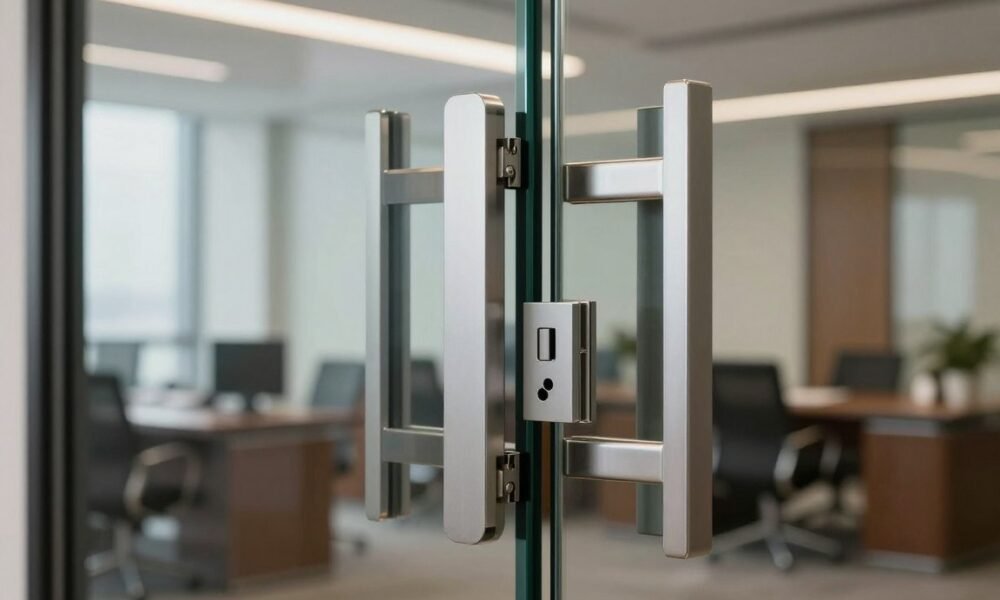
Pivot doors rotate on a spindle rather than hinges, creating a dramatic entrance with a larger opening. These statement pieces are perfect for executive offices, main entrances, or conference rooms where making an impression matters. The central pivot point allows for heavier, wider door panels than traditional hinged designs.
Frosted and Patterned Glass Doors
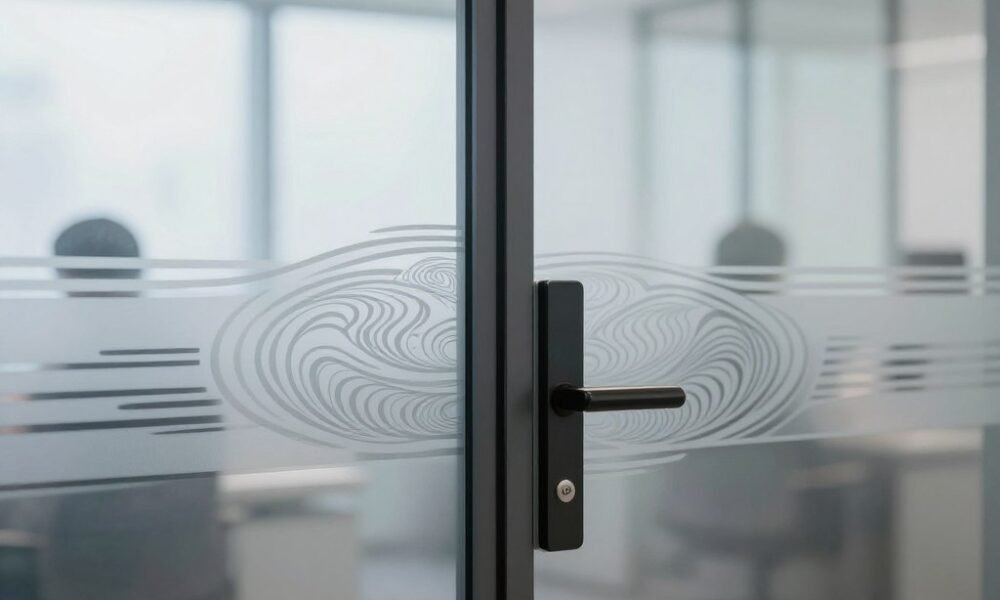
Frosted and patterned glass doors offer an excellent balance between openness and privacy. These designs diffuse light while obscuring direct visibility, making them ideal for private offices, meeting rooms, and areas where some visual separation is desired while maintaining a bright, connected feel.
Frosting Options
- Full frosting for maximum privacy
- Partial frosting (bands or sections)
- Gradient frosting that transitions from opaque to clear
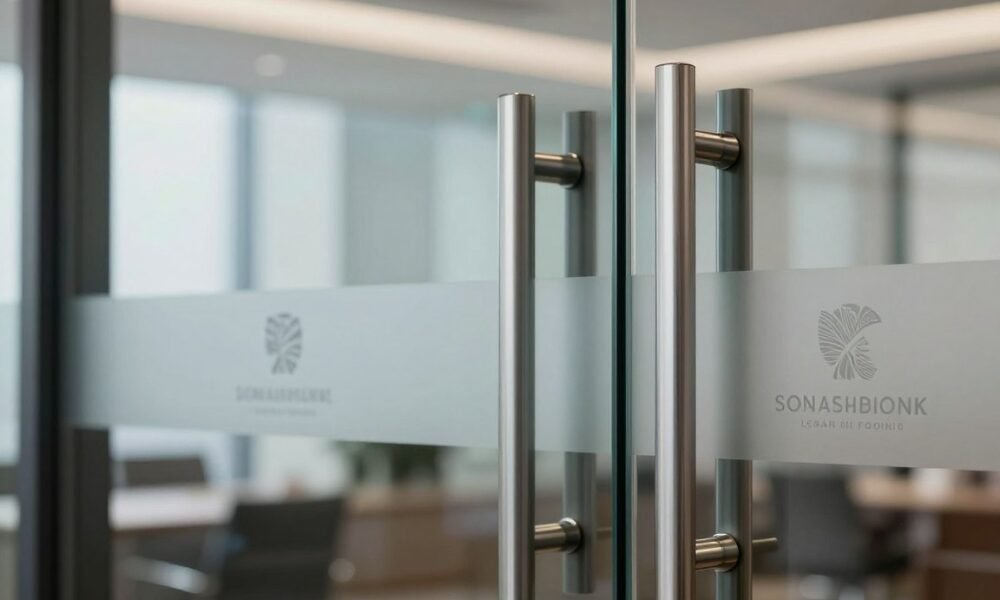
- Custom patterns and corporate branding
Application Methods
- Acid-etched (permanent, smooth finish)
- Sandblasted (textured finish)
- Vinyl film (removable, cost-effective)
- Digital printing for complex designs
Smart Glass Doors
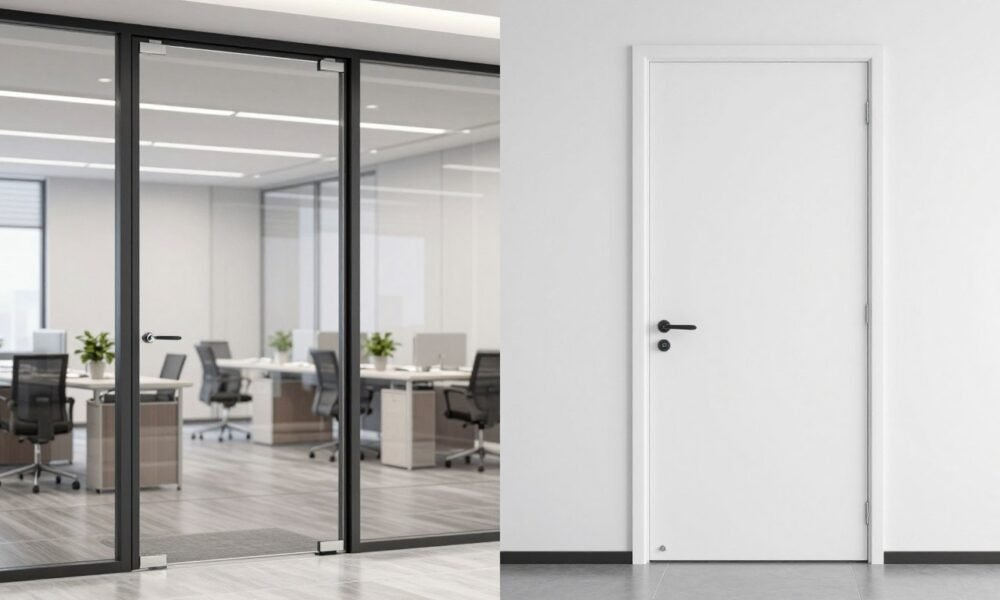
Smart glass technology represents the cutting edge of office door design, allowing glass to switch from transparent to opaque with the flip of a switch or tap on a smartphone. This versatility provides on-demand privacy without sacrificing the benefits of glass when transparency is preferred.
“Smart glass doors have transformed how we use our conference spaces. We can instantly create privacy for sensitive meetings while maintaining an open environment the rest of the time. The technology has paid for itself in the flexibility it provides.”
Key Considerations for Office Glass Door Selection
When selecting glass doors for your office, several important factors should guide your decision to ensure the best fit for your specific needs and environment.
Acoustic Performance
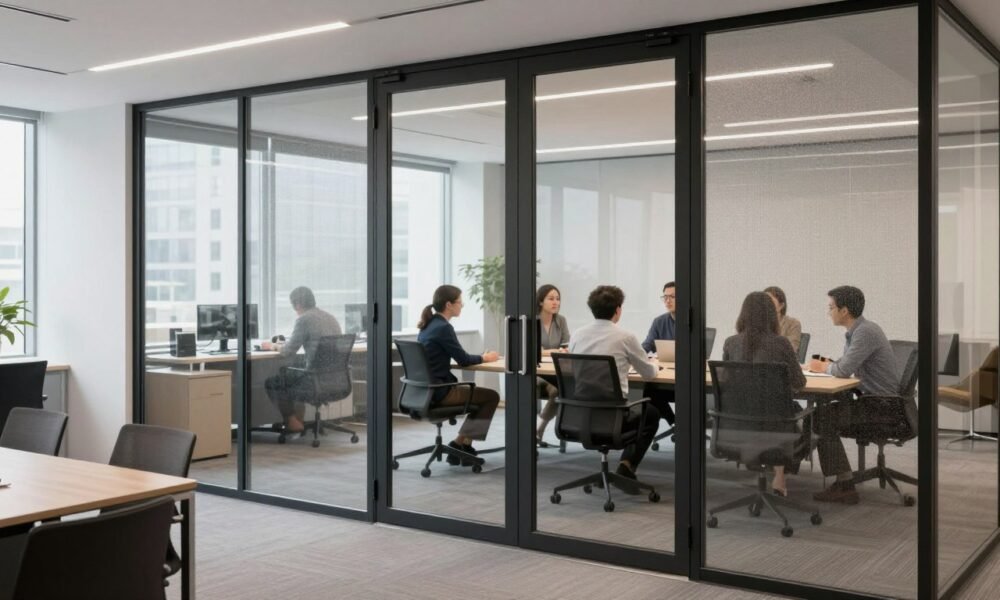
Sound privacy is crucial in office environments. Standard single-pane glass offers limited sound insulation, while laminated or double-glazed options significantly reduce noise transmission. For meeting rooms and executive offices, doors with acoustic ratings of STC 35 or higher are recommended to ensure confidential conversations remain private.
Safety Standards
All glass doors in office settings must use safety glass—either tempered or laminated—to comply with building codes and ensure workplace safety. Tempered glass is heat-treated to break into small, less dangerous pieces, while laminated glass holds together when shattered. For high-traffic areas, consider doors with visible markers to prevent accidental collisions.
Privacy Requirements
Assess the privacy needs of different spaces within your office. Executive offices and HR departments may require higher levels of visual privacy through frosted or smart glass, while collaborative areas might benefit from clear glass that maintains visual connection while providing acoustic separation.
Need help choosing the right glass door solution?
Our design experts can guide you through the options and help you select the perfect glass door system for your specific office requirements.
Hardware Quality
The hardware components—handles, tracks, hinges, and closing mechanisms—significantly impact the door’s functionality and longevity. Invest in high-quality hardware that ensures smooth operation and can withstand frequent use in busy office environments. Premium hardware also enhances the overall aesthetic and user experience.
Maintenance Requirements
Consider the ongoing maintenance needs of different glass door systems. Frameless designs may require more frequent cleaning to maintain their pristine appearance, while track systems for sliding doors need periodic maintenance to ensure smooth operation. Factor these considerations into your total cost of ownership calculations.
Accessibility Compliance
Ensure your glass door selections comply with accessibility standards like ADA requirements. This includes appropriate door width (minimum 32 inches clear opening), manageable opening force (maximum 5 pounds), and proper hardware placement. For sliding doors, consider recessed tracks that eliminate tripping hazards.
Integrating Glass Doors with Office Design
The most successful office glass door implementations are those that harmonize with the overall design concept and functional requirements of the workspace.
Design Consistency
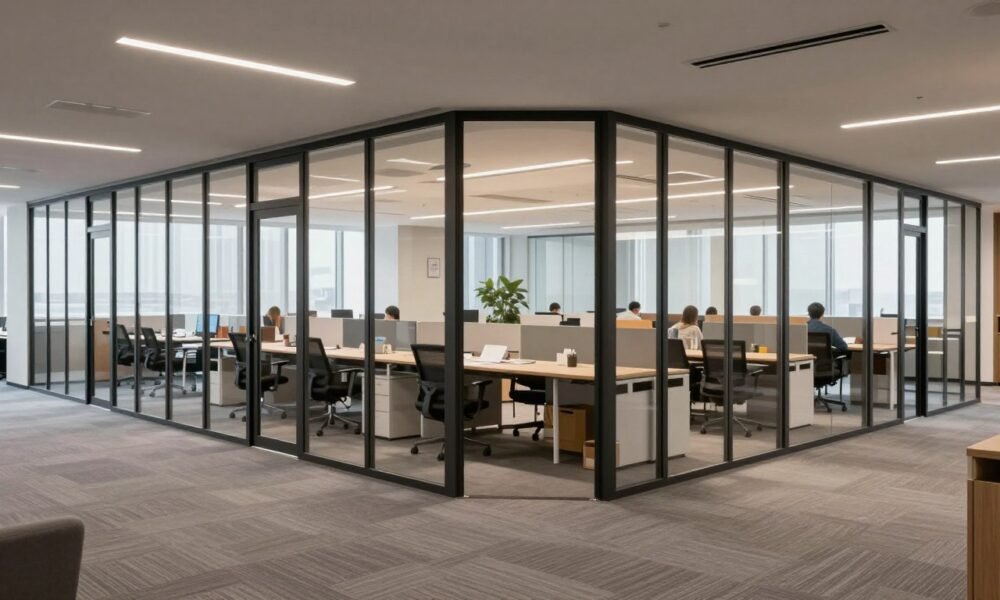
Maintain visual harmony by ensuring your glass door selections complement other design elements in your office. Consider how the door frames, hardware finishes, and glass treatments align with your overall color scheme, materials palette, and architectural style. Consistency in these details creates a cohesive, professional environment.
Branding Opportunities
Glass doors offer excellent opportunities for subtle branding through etched logos, frosted patterns that reflect company values, or color accents that align with your brand identity. These customizations transform functional elements into expressions of your corporate culture and visual identity.
Lighting Considerations
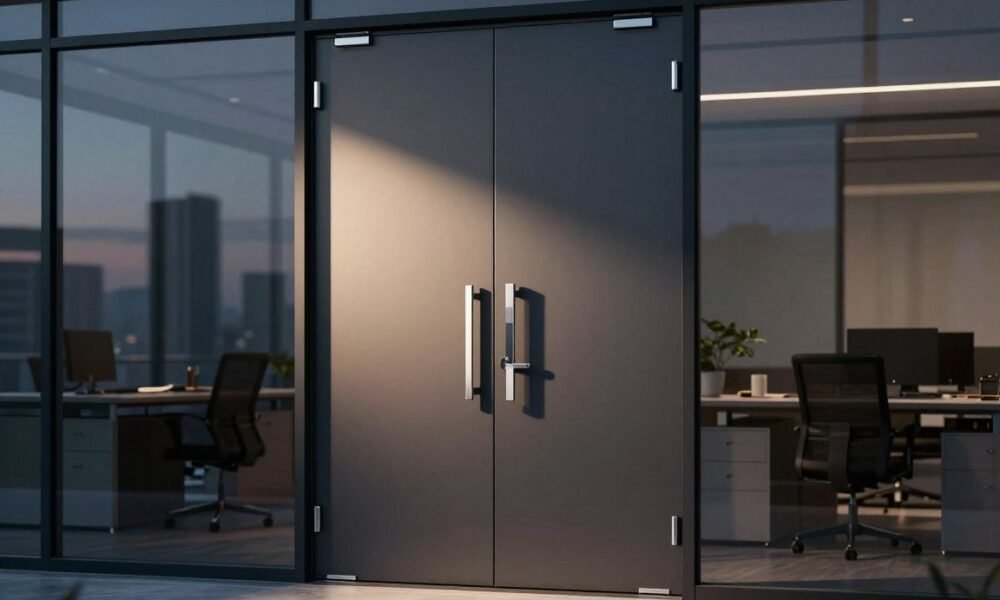
The interplay between glass doors and lighting significantly impacts the office atmosphere. Consider how natural and artificial light interact with your glass selections. Strategic placement of light fixtures can enhance the transparency of clear glass or create dramatic effects with frosted or patterned surfaces.
Functional Zoning
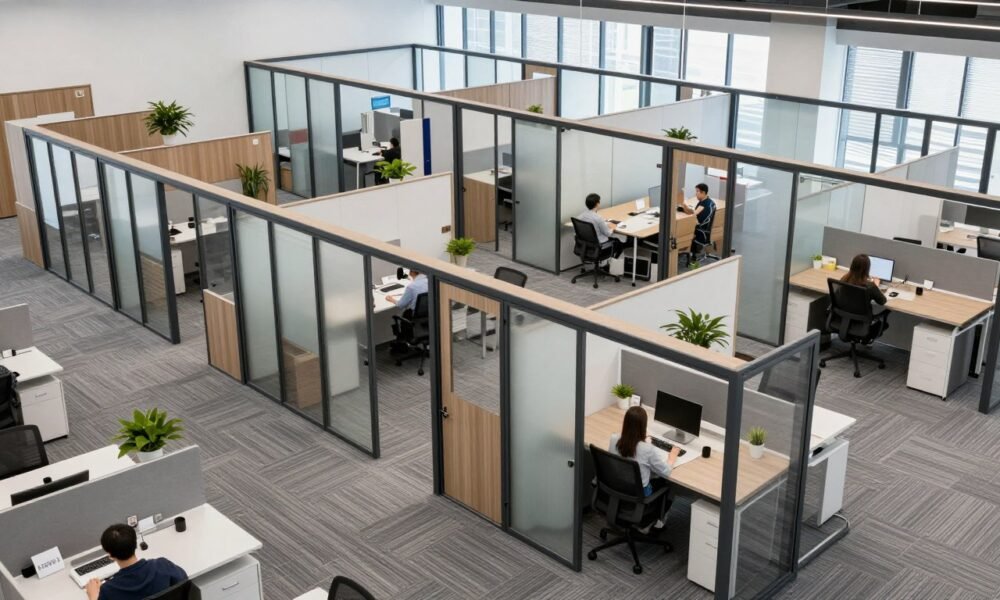
Use different glass door types to define functional zones within your office. Consider how the transparency, acoustic properties, and operation style of each door type can support the activities in different areas. For example, fully transparent doors might be ideal for collaborative zones, while frosted options better serve areas requiring concentration or privacy.
Current Trends in Office Glass Door Design
Stay ahead of the curve by incorporating these contemporary trends in office glass door design that balance aesthetics with functionality.
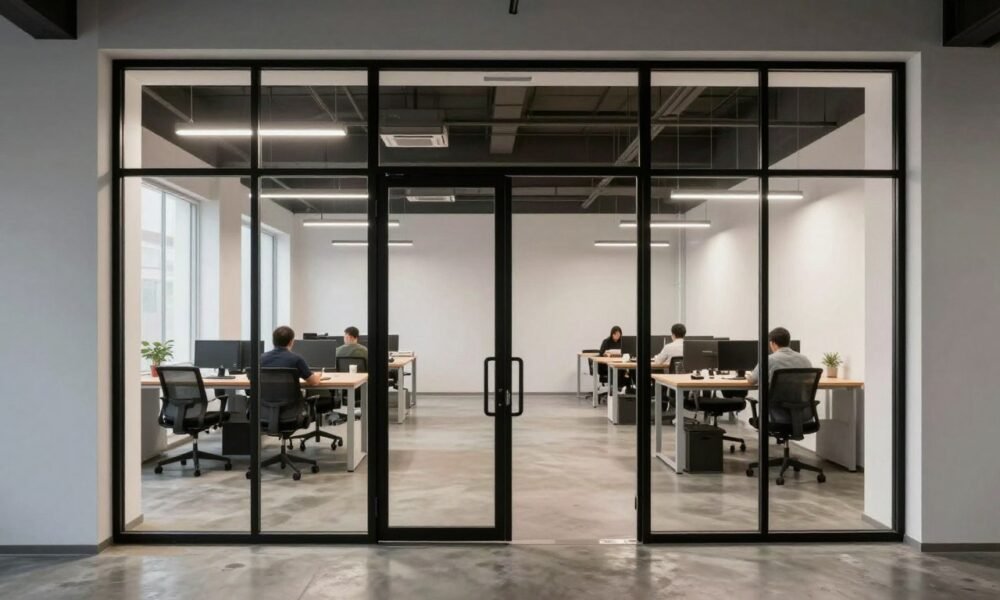
Minimalist Black Frames
Thin black metal frames around glass doors have become increasingly popular, offering a striking industrial aesthetic that complements both modern and traditional office interiors. This style provides visual definition while maintaining the light-enhancing benefits of glass.
Oversized Panels
Larger glass panels create dramatic entrances and maximize light flow. Advances in glass manufacturing and hardware technology now allow for taller and wider door panels that make a bold architectural statement while enhancing the sense of openness.
Integrated Technology
Smart glass doors with privacy-on-demand features are gaining traction, as are doors with integrated access control systems. These technological integrations enhance security and flexibility while maintaining the clean aesthetic of glass.
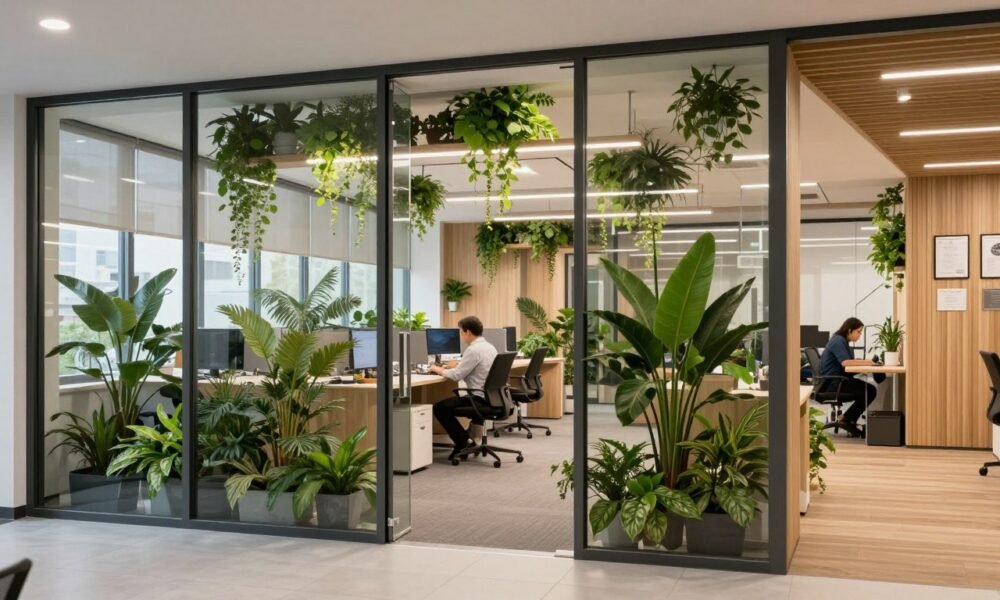
Sustainability Focus
Environmentally conscious offices are selecting glass doors with enhanced thermal properties to improve energy efficiency. Manufacturers are also offering options with recycled content and sustainable production methods to align with green building certifications like LEED and WELL.
Transform Your Office with the Right Glass Door Design
The perfect office glass door design balances aesthetics, functionality, and practical considerations to create a workspace that inspires productivity and projects professionalism. By carefully selecting door types, glass treatments, and hardware that align with your specific needs, you can transform your office environment while addressing crucial factors like privacy, acoustics, and space efficiency.
Whether you’re designing a new office or renovating an existing space, glass doors offer versatile solutions that can adapt to evolving workplace requirements while maintaining a timeless appeal. The investment in quality glass door systems pays dividends through enhanced natural light, improved spatial flow, and the creation of a contemporary work environment that impresses clients and supports employee wellbeing.
Ready to elevate your office design?
Our team of experts specializes in custom glass door solutions for modern workspaces. Contact us today for a personalized consultation and quote.
Frequently Asked Questions
How do glass doors impact office acoustics?
Standard single-pane glass doors provide minimal sound insulation. For improved acoustic performance, consider laminated or double-glazed options with specialized seals that can achieve STC ratings of 35-45, sufficient for most office privacy needs. Acoustic performance can be further enhanced with proper installation techniques and complementary wall construction.
What maintenance do glass office doors require?
Glass doors require regular cleaning with appropriate glass cleaners to maintain clarity and appearance. Hardware components like tracks, hinges, and sliding mechanisms should be inspected and lubricated periodically according to manufacturer recommendations. Most quality systems need minimal maintenance beyond this routine care.
Are glass doors suitable for high-traffic office areas?
Yes, when properly specified. For high-traffic areas, select tempered or laminated safety glass with durable hardware rated for commercial use. Consider doors with automatic operators or easy-open mechanisms for frequently used entrances. Adding visible markers or patterns can prevent accidental collisions in busy environments.
Read More:-
https://www.linkedin.com/company/decoratr


Stunning Restaurant Interior.
“Design is not just what it looks like and feels like. Design is how it works.” — Steve Jobs In India’s fast-paced.
Best Interior Designer.
Finding the best interior designer in Delhi NCR can be challenging. With hundreds of designers promising creativity and timely delivery, clients often.