
Stylish Interior Design for Office: Transform Your Workspace
Ever thought why some workplaces boost team energy while others suck the life out? It’s all about smart interior design for office spaces. It’s more than picking colors and furniture.
Your office is not just a spot for work. It’s a key tool that boosts productivity, shapes how clients see you, and builds your company’s vibe. The right setting can make any workday inspiring.
In India, smart businesses are catching on. Companies in Mumbai, Bangalore, and Delhi are upgrading their workspaces to stay ahead. They see that good space planning tackles real issues like small spaces and keeping teams engaged.
The bright side? Making your office look great isn’t hard. With the right steps, you can create a space that shows off your brand and helps your team thrive. This path to change is easy to follow and very rewarding.
Key Takeaways
- Workspace looks affect how well employees work and feel
- Good space planning is a smart business move, not just a cosmetic touch-up
- Indian companies are making their workspaces modern to stay competitive
- Great environments solve real problems like small spaces and team connection
- Thoughtful office design strengthens your brand and shapes your company’s culture
- Creating an amazing office space is within reach with the right advice
Why Office Interior Design Transforms Your Business Success
Smart business leaders in India see office interior design as more than just looks. It’s a key investment in their company’s future. The design of your workspace affects your team’s performance, how clients see your brand, and your business growth. This link between design and success is proven to boost your bottom line.
When employees enter a well-designed office, they feel valued and motivated. Studies show that good workspaces can increase productivity by 20-25%. This means better business results. A supportive environment leads to higher quality work and keeps employees longer.
The impact of corporate workspace decor goes beyond just making employees happy. Your office tells a story to every client who visits. A modern, professional space shows you’re forward-thinking and successful. It builds trust before you even speak.
Let’s look at the real benefits of business environment design for your company:
| Business Impact Area | Design Influence | Measurable Outcome | Long-term Benefit |
|---|---|---|---|
| Employee Retention | Comfortable, inspiring workspace | 15-30% reduction in turnover | Lower recruitment costs and retained expertise |
| Client Acquisition | Professional, modern office aesthetic | Higher close rates on proposals | Enhanced brand reputation and referrals |
| Team Productivity | Functional layout with proper lighting and acoustics | 20-25% increase in output quality | Faster project completion and revenue growth |
| Creative Innovation | Collaborative spaces and flexible work zones | More innovative solutions and ideas | Competitive advantage in market positioning |
Workspace design affects more than you might think. Colors influence mood and energy. Natural light reduces stress and boosts focus. Open areas spark creativity, while quiet zones help with deep work.
Many Indian business owners think good design is only for tech startups or big companies. But, all businesses can benefit from it. Whether in Pune, Delhi, or Chennai, your workspace shapes your success.
A mid-sized accounting firm in Hyderabad redesigned their office. They added better lighting, ergonomic furniture, and client meeting spaces. In six months, they saw 23% fewer sick days, 18% faster project completion, and more client referrals. The design paid off in the first year through cost savings and increased revenue.
Small businesses gain just as much from good design as big ones. A startup with 12 employees can create an impressive, functional workspace. It attracts top talent and impresses investors. The goal is to make smart design choices that match your business goals and culture.
Your office environment impacts employee health, affecting your business. Poor lighting causes eye strain and headaches. Bad ventilation leads to more sick days. Uncomfortable furniture causes chronic pain. Good design prevents these problems, boosting productivity and saving on healthcare costs.
In India’s competitive market, every advantage counts. When two companies offer similar products or services, the better workplace environment wins. Corporate workspace decor is what sets successful businesses apart.
There’s a human side to this too. People spend a third of their lives at work. Creating a comfortable, inspiring environment is good for business and right to do. Companies that care about employee wellbeing build stronger, more resilient organizations.
Improving your workspace doesn’t need a complete overhaul. You can make strategic changes in phases. Start with the biggest challenges—like collaboration, client perception, or employee retention. Each improvement builds momentum toward a workspace that supports your business goals.
Core Principles of Interior Design for Office Environments
Every office tells a story through its design choices, from color schemes to spatial arrangements. Understanding the core principles behind effective workspace design helps you create functional office spaces that support your team’s success. These foundational elements work together to shape how employees feel, interact, and perform throughout their workday.
The difference between an ordinary office and an exceptional one lies in thoughtful application of design fundamentals. When you grasp these principles, you can make informed decisions that transform your workspace into a productivity powerhouse.
Understanding Corporate Workspace Decor Fundamentals
The foundation of successful office design rests on two critical pillars: color psychology and intelligent space planning. These elements influence everything from employee energy levels to operational efficiency. Getting them right can make the difference between a workspace that energizes your team and one that drains productivity.
Color Psychology and Brand Integration
Colors do much more than make your office look attractive. They directly impact mood, focus, and even perceived temperature in Indian climates where cooling costs matter significantly. Blue tones promote concentration and calm, making them ideal for areas requiring deep focus. Yellow and orange stimulate creativity and energy, perfect for brainstorming zones.
Green reduces eye strain and creates a sense of balance, particularly valuable in tech-heavy environments. Red increases alertness but should be used sparingly as it can raise stress levels. In Indian offices where natural light varies throughout the day, choosing the right color palette becomes even more critical.
Brand integration should feel natural rather than forced. Instead of painting every wall in your brand colors, consider accent walls, furniture pieces, or artwork that subtly reinforce your identity. A financial services company might incorporate deep blues and grays that convey trust while adding warmth through wood tones. A creative agency could embrace bolder colors that reflect innovation without overwhelming the senses.
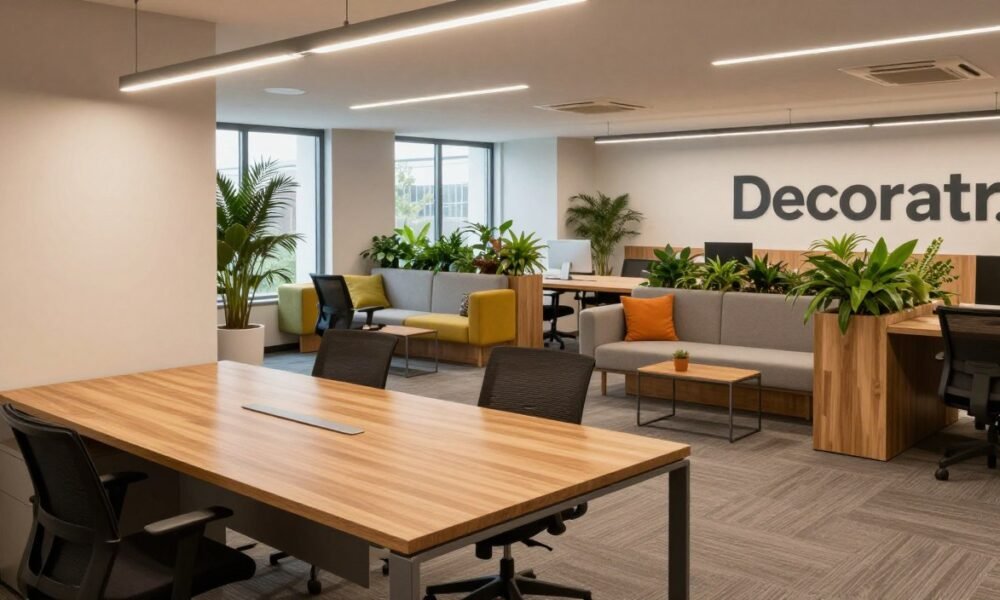
Smart spatial planning prevents bottlenecks and disruptions that waste time and create frustration. Think about how people move through your office during peak hours. Do multiple teams need to cross through the same narrow corridor to reach meeting rooms? Are high-traffic areas like printers and coffee stations creating congestion?
Creating functional office spaces requires mapping out traffic patterns before placing furniture. Place frequently accessed resources near main pathways rather than tucking them into corners where they create unnecessary foot traffic. Position workstations away from major walkways to minimize distractions.
In Indian offices where space optimization is essential, consider vertical storage solutions and multi-functional furniture. A reception area that doubles as a casual meeting space or modular furniture that reconfigures for different needs maximizes every square foot.
Professional Office Layout Strategies
Developing a professional office layout demands balancing competing needs. Your space must accommodate collaboration while protecting focus time. It should feel open and inviting without becoming chaotic or noisy. Achieving this balance requires strategic zoning and thoughtful furniture placement.
Balancing Open and Private Workspaces
The debate between open offices and private spaces misses an important point: most businesses need both. Open areas facilitate quick communication and team bonding. Private spaces provide refuge for concentrated work and confidential conversations. The key is determining the right proportion for your specific operations.
A successful professional office layout typically dedicates 60-70% of space to collaborative or semi-open areas and 30-40% to private zones. However, this ratio shifts based on your industry. A call center needs more individual stations with acoustic treatment, while a design studio might reverse the ratio to encourage creative collaboration.
Consider creating “zones” within open areas using furniture arrangement, floor finishes, or subtle dividers. Low bookcases, planters, or glass partitions define spaces without completely closing them off. This approach maintains visual connection while providing psychological boundaries that help people focus.
Creating Collaborative Zones Without Sacrificing Focus
Collaboration is essential, but poorly designed collaborative spaces create noise pollution that destroys productivity elsewhere. Strategic placement of meeting areas away from concentration zones protects both functions. Locate your collaborative spaces near entrances, pantries, or other naturally active areas where conversation won’t disrupt focused work.
Sound management becomes critical in functional office spaces. Acoustic panels, carpeting, and sound-absorbing furniture reduce noise transmission between zones. In Indian offices where cost-consciousness matters, even simple solutions like fabric wall hangings or strategically placed bookcases improve acoustics significantly.
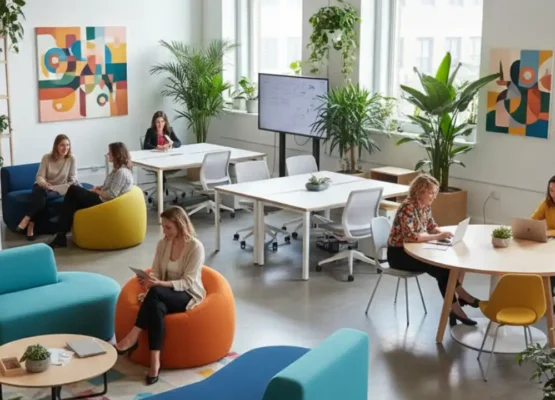
Variety in collaborative spaces supports different interaction styles. Include formal meeting rooms for presentations, casual lounge areas for quick discussions, and standing-height tables for brief check-ins. This diversity allows teams to choose the environment that matches their collaboration needs without forcing one-size-fits-all solutions.
| Workspace Type | Best Applications | Key Design Features | Space Allocation |
|---|---|---|---|
| Open Collaborative Areas | Team discussions, quick meetings, brainstorming sessions | Flexible furniture, whiteboards, natural light, acoustic treatment | 40-45% of total area |
| Focus Zones | Concentrated individual work, report writing, data analysis | Minimal distractions, ergonomic seating, task lighting, sound barriers | 30-35% of total area |
| Private Meeting Rooms | Confidential discussions, client meetings, video conferences | Soundproofing, professional aesthetics, technology integration | 15-20% of total area |
| Amenity Spaces | Breaks, informal conversations, decompression | Comfortable seating, refreshments, relaxed atmosphere | 10-15% of total area |
These core principles form the building blocks of effective workspace design. When you understand how color influences behavior, how traffic flow impacts efficiency, and how to balance different work modes, you gain the foundation needed to create an office that truly serves your business goals. The next step involves applying modern design trends that bring these principles to life in contemporary Indian workplaces.
Modern Office Aesthetics and Design Trends
Your workspace can show off your brand’s identity with smart design choices. Today’s best office interiors blend beauty with usefulness. They make spaces where employees are energized, clients are impressed, and your culture shines.
Modern workspace design has moved beyond boring cubicles and cold conference rooms. It now focuses on personal touches, wellness, and flexibility. Indian businesses see that good design boosts employee happiness and business success.
Choosing the right trends for your office is key. Not every trend fits every business. Your office should reflect your unique story.
Contemporary Workplace Interior Solutions for India
Indian workplaces face special challenges that need custom design solutions. The climate, culture, and fast-changing business scene all play a role. Understanding these helps create spaces that are both modern and locally relevant.
Modern Indian office solutions must tackle practical issues like climate control and space use. They should also reflect the teamwork and hierarchy common in Indian businesses. The goal is to honor tradition while embracing new ideas.
Minimalist design offers a calm escape from the outside world’s noise. It uses clean lines, simple surfaces, and thoughtful colors to create focus-friendly spaces. This doesn’t mean cold or sterile—it means intentional and purposeful.
Minimalism values quality over quantity. Each element in the space has a clear purpose. A well-designed minimalist office has carefully chosen furniture, smart storage, and enough room to feel spacious.
In Indian offices, minimalist design works well with warm materials and textures. Think natural wood, textured fabrics, and warm colors. These add warmth without losing the clean look that boosts productivity.
“Simplicity is the ultimate sophistication. In design, less is often more when every element is chosen with intention.”
Starting a minimalist office doesn’t mean a complete overhaul. Begin with decluttering, investing in quality storage, and choosing furniture with clean lines. Even small changes can make a big difference in how your space feels.
Biophilic Elements for Wellness and Creativity
Biophilic design brings nature into your workspace with plants, natural materials, and nature-inspired patterns. Studies show it reduces stress, boosts creativity, and improves wellbeing. For urban Indian offices, these benefits are especially valuable.
You don’t need to be a botanist to add biophilic elements. Many plants thrive in Indian office conditions with little care. Try money plants, snake plants, or ZZ plants—they handle air-conditioned environments and occasional watering lapses well.
Natural materials go beyond plants. Wood, stone, bamboo, and natural fibers all contribute to biophilic design. Even digital nature displays or nature-inspired artwork can offer benefits when live plants aren’t possible.
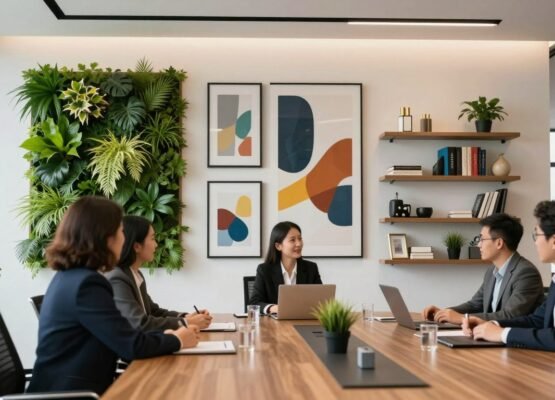
Place biophilic elements thoughtfully to maximize their impact. Put plants near workstations, create green walls in reception areas, and use natural wood in conference tables. This makes your office a restorative space, not just a work area.
The connection between nature and productivity is real. Natural elements help regulate our body clocks, improve air quality, and create feelings of growth and renewal. Your office becomes a place of restoration, not just work.
Strategic Office Furniture Arrangement
Thoughtful furniture arrangement changes how your space works and feels. The same furniture can create different experiences based on where it’s placed. Arrange furniture with purpose, considering traffic flow, collaboration needs, privacy, and visual harmony.
Before moving furniture, map out your space with purpose in mind. Identify busy areas, collaboration spots, and quiet spaces. Think about how natural light moves through the day and where people naturally go. This foundation guides all your decisions.
Good arrangements balance openness with definition. Spaces should feel connected but also have clear boundaries for different activities. This balance is crucial in Indian offices, where teamwork and respect for hierarchy are key.
Functional Office Spaces Through Smart Placement
Smart furniture placement makes the most of every square foot while keeping spaces comfortable to move through. Ensure main paths are clear—aim for at least 36 inches of walking space. This prevents cramped, uncomfortable offices.
Think about sight lines when placing desks and workstations. People prefer seeing entrances rather than having their backs to doors. Window views boost morale, so avoid blocking natural light with storage or partitions. These factors greatly affect daily comfort.
Create different zones for various activities through smart furniture arrangement:
- Collaboration zones: Place modular seating and movable tables in open areas for spontaneous meetings
- Focus areas: Put individual workstations in quieter spots, using subtle partitions for privacy
- Social spaces: Arrange comfy seating near pantries for informal chats that build team bonds
- Reception areas: Position guest seating with clear sight lines to welcome desks while maintaining distance
Scaling furniture is crucial. Too big furniture overwhelms small rooms, while too small makes large spaces feel empty. Measure carefully and choose furniture that fits each area well. When unsure, slightly smaller is usually better than too large.
Statement Pieces That Reflect Your Business Environment Design
Statement pieces are visual anchors that show your brand’s personality and make lasting impressions. These distinctive elements—whether furniture, art, or architectural features—give your office character. They turn workplaces from functional to inspiring.
Choosing the right statement pieces means understanding your brand identity. A creative agency might pick bold, unconventional furniture and vibrant artwork. A law firm might choose classic, well-crafted pieces. A tech startup might use innovative materials or unexpected shapes. Your choices should feel true to who you are.
Statement pieces work best when they contrast thoughtfully with the rest of the space. A dramatic reception desk makes a big impact when surrounded by calmer design. A colorful art installation pops against neutral walls. This contrast creates visual interest without chaos.
“Great design is about making spaces memorable for the right reasons. Statement pieces should spark conversation and reflect the values that make your business unique.”
Consider these statement piece options for different office areas:
- Reception: A custom-designed desk with unique materials or an impressive art installation that immediately conveys your brand
- Conference rooms: A distinctive table that becomes the centerpiece for important discussions and decisions
- Common areas: Sculptural lighting fixtures or statement seating that encourages employees to gather and connect
- Private offices: Carefully selected artwork or furniture that reflects individual leadership styles while maintaining cohesion
Quality is more important than quantity with statement pieces. One exceptional piece can have more impact than many mediocre ones. Invest wisely in pieces that will last both physically and stylistically. True statement pieces become part of your company’s story and identity over time.
Remember, statement pieces should enhance functionality, not compromise it. A visually stunning but uncomfortable chair fails its purpose. The best design combines form and function seamlessly, creating pieces that employees enjoy using daily and guests admire.
Ergonomic Office Design for Peak Performance
When employees spend eight hours or more in your office, every design decision impacts their health, energy levels, and ability to perform at their best. The right ergonomic office design doesn’t just prevent discomfort—it actively supports your team’s physical wellbeing and mental clarity throughout the workday. Indian businesses are increasingly recognizing that investing in employee comfort translates directly into reduced absenteeism, fewer health complaints, and noticeably higher productivity levels.
Creating a workspace that truly supports your team requires understanding how various environmental factors work together. From the lighting that illuminates their screens to the chairs that support their backs, each element plays a vital role in either enhancing or diminishing daily performance.
Essential Ergonomic Features Every Office Needs
Building an office that genuinely cares for your employees starts with implementing fundamental features that address their most pressing needs. These workplace interior solutions form the foundation of any health-conscious workspace, preventing the common issues that plague traditional office environments. Understanding what your office truly needs helps you prioritize investments that deliver the greatest impact on employee satisfaction and productivity.
Lighting Solutions That Reduce Eye Strain
India’s intense sunlight creates unique lighting challenges that demand careful planning. During peak afternoon hours, uncontrolled natural light streaming through windows can create severe glare on computer screens, forcing employees to squint and strain their eyes. This issue becomes particularly acute in cities like Mumbai, Delhi, and Bangalore where glass-fronted buildings are common.
The solution lies in creating layers of light that adapt to changing conditions throughout the day. Start with adjustable blinds or solar films that diffuse harsh sunlight without blocking it completely. This approach maintains the psychological benefits of natural light while eliminating the discomfort of direct glare.
Task lighting deserves special attention at every workstation. Individual desk lamps give employees control over their immediate lighting needs, which vary based on the task at hand and personal preferences. Position these lights to illuminate work surfaces without creating reflections on screens.
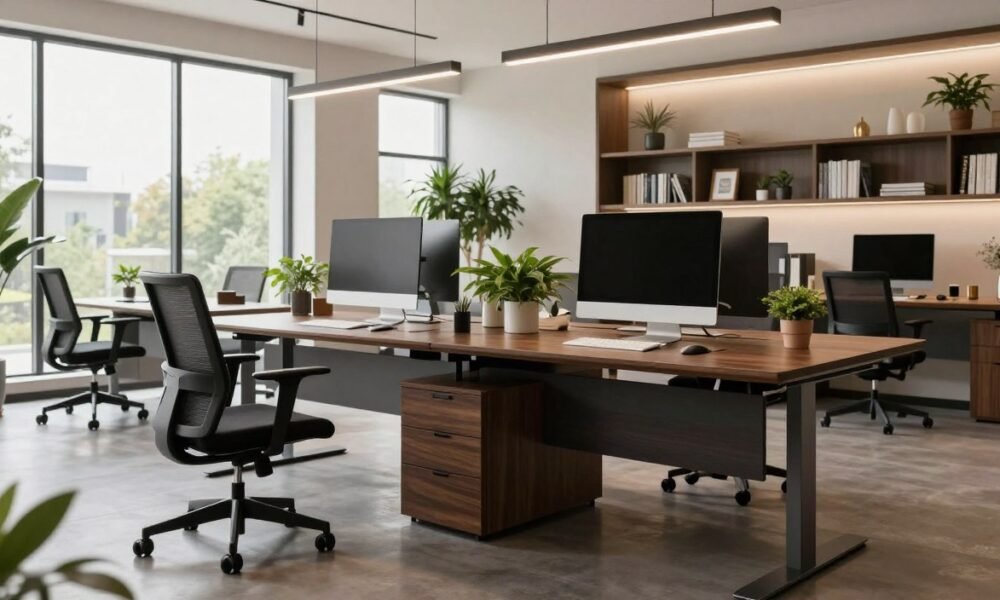
Ambient lighting should provide overall illumination that feels comfortable rather than clinical. LED panels with adjustable color temperatures allow you to create warmer lighting in the morning and cooler, more energizing light during afternoon hours when energy naturally dips. This mimics natural light patterns and helps maintain alertness without causing the harsh brightness that triggers headaches.
Consider the unique needs of different work zones. Meeting rooms benefit from brighter, more energizing light that keeps participants alert and engaged. Break areas work better with softer, warmer lighting that helps employees truly relax during their rest periods.
Acoustic Design for Better Concentration
Noise pollution in Indian offices presents a significant productivity challenge that often goes unaddressed. The combination of phone conversations, keyboard clicking, nearby traffic, and everyday office activity creates a constant din that makes deep concentration nearly impossible. Research consistently shows that uncontrolled noise reduces productivity by up to 66% and increases stress levels dramatically.
Acoustic panels offer an effective first line of defense against unwanted noise. These sound-absorbing materials can be strategically mounted on walls and ceilings in high-traffic areas where noise tends to amplify. Modern acoustic panels come in attractive designs and colors that enhance rather than detract from your office aesthetics.
Carpet and soft furnishings play an often-overlooked role in noise control. Hard surfaces like tile, marble, and glass—popular in Indian commercial spaces—reflect sound waves and amplify noise. Adding area rugs, upholstered furniture, and fabric wall coverings absorbs sound and creates a noticeably quieter environment.
Strategic spatial planning makes a tremendous difference in managing noise levels. Position noisy equipment like printers and coffee machines in dedicated areas away from quiet work zones. Create phone booths or small enclosed spaces where employees can take calls without disturbing colleagues.
Open offices benefit enormously from sound masking systems that generate subtle background noise. This white noise makes individual conversations less intelligible from a distance, giving employees acoustic privacy even in open layouts. The technology has become increasingly affordable and effective for Indian workplaces.
Health-Focused Workplace Interior Solutions
Moving beyond basic ergonomic features, truly health-conscious offices implement comprehensive solutions that address the full spectrum of employee wellness needs. These workplace interior solutions recognize that preventing discomfort is just the starting point—the goal is creating an environment that actively promotes physical health and mental clarity throughout the entire workday.
Adjustable Furniture and Proper Workstation Setup
The epidemic of back pain and neck strain among Indian office workers stems directly from workstations that don’t fit the people using them. Nearly 80% of office workers experience musculoskeletal problems at some point in their careers, most of which are entirely preventable through proper furniture selection and setup.
Adjustable chairs form the cornerstone of any ergonomic workstation. Look for chairs that offer height adjustment, lumbar support customization, and armrest positioning. The chair should allow employees to sit with feet flat on the floor, thighs parallel to the ground, and backs fully supported by the lumbar cushion.
Desk height matters more than most people realize. Standard desks suit average-height individuals but cause problems for shorter or taller employees who find themselves hunching or reaching uncomfortably. Height-adjustable desks solve this issue by accommodating different body types and allowing the same workspace to serve multiple users comfortably.
Monitor positioning requires careful attention to prevent the neck strain that plagues computer users. The top of the screen should sit at or slightly below eye level, positioned about an arm’s length away. This placement allows employees to view their work with a slight downward gaze, which reduces eye strain and maintains proper neck alignment.
Keyboard and mouse placement often gets overlooked but significantly impacts arm and shoulder comfort. These input devices should sit close enough that employees can use them without reaching forward, with wrists in a neutral position rather than bent upward or downward. Keyboard trays that position typing surfaces below desk level work well for many users.
| Workstation Element | Proper Setup | Common Problems When Wrong | Health Impact |
|---|---|---|---|
| Chair Height | Feet flat on floor, thighs parallel to ground | Dangling feet or excessive pressure on thighs | Lower back pain, poor circulation |
| Monitor Position | Top at eye level, arm’s length away | Looking up or down excessively | Neck strain, headaches, eye fatigue |
| Keyboard Placement | Close to body, wrists neutral | Reaching forward, bent wrists | Repetitive strain injury, shoulder tension |
| Lumbar Support | Supports natural spine curve | Slouching or inadequate back support | Chronic back problems, muscle fatigue |
Movement Zones and Wellness Areas
The human body wasn’t designed for eight consecutive hours of sitting, yet traditional office design forces exactly that behavior. Progressive companies are creating spaces that encourage natural movement throughout the day, recognizing that physical activity boosts both health and cognitive performance.
Standing desk zones give employees the option to work on their feet for portions of the day. These don’t need to be sophisticated electric desks—simple standing-height counters or tables work perfectly for checking emails, making phone calls, or collaborating on quick tasks. The goal is variety in posture rather than replacing sitting entirely.
Walking paths within the office encourage spontaneous movement during the workday. When the route from one department to another passes through pleasant spaces rather than cramped corridors, employees naturally walk more. Consider adding elements like plants, artwork, or windows along these paths to make walking genuinely enjoyable.
Informal meeting spaces that use high tables or comfortable lounge seating get people out of their desk chairs for discussions and collaboration. These areas promote the kind of dynamic, engaged conversation that rarely happens when everyone sits in identical conference room chairs around a formal table.
Dedicated wellness areas provide space for employees to decompress, stretch, or practice brief mindfulness exercises. These don’t require extensive square footage—a quiet corner with comfortable seating and perhaps some plants can serve this purpose effectively. The key is creating a clear psychological boundary that signals “this space is for restoration.”
Stairwell design deserves attention as an opportunity to promote movement. Making stairs attractive, well-lit, and easily accessible encourages employees to skip the elevator for short trips between floors. Some forward-thinking Indian companies are transforming stairwells into feature spaces with artwork, motivational messages, and appealing finishes that make taking the stairs feel like a pleasant choice rather than a chore.
Your Complete Commercial Space Planning Journey
Planning your commercial space doesn’t have to be overwhelming. Many business owners in India are hesitant to redesign their offices. They worry about costs, timelines, and disruption to daily operations.
A well-planned transformation can happen smoothly with minimal interruption. This section will guide you through every step of the office redesign journey. You’ll learn what to expect during consultations, how to set realistic budgets, and why partnering with experienced professionals makes all the difference.
The Business Environment Design Process
Creating an effective business environment design starts with understanding your unique needs and goals. Professional designers don’t just make spaces look beautiful—they solve problems and create environments that support your business objectives. The process unfolds in clear, manageable stages that keep you informed and in control.
This journey is a partnership where your vision meets professional expertise. Each phase builds on the previous one, creating momentum toward your ideal workspace.
Your office transformation begins with a thorough consultation where designers learn about your business. This conversation covers much more than aesthetics—it explores how your team works, your company culture, and your growth plans for the coming years.
During this initial meeting, expect your designer to ask detailed questions about workflow patterns. They’ll want to know which departments collaborate frequently, where employees struggle with the current layout, and what frustrations your team experiences daily.
Prepare for your consultation by gathering this information:
- Current employee headcount and projected growth over the next 3-5 years
- Department structures and how teams need to interact
- Technology requirements including server rooms and equipment needs
- Brand guidelines, color preferences, and style inspirations
- Pain points with your existing space layout
- Must-have features versus nice-to-have elements
Professional designers will also evaluate your existing space during this phase. They’ll take measurements, assess structural elements, identify opportunities for improvement, and spot potential challenges before they become expensive problems.
Budget Planning and Realistic Timelines
Understanding the financial investment required for commercial space planning helps you make informed decisions. Office redesign costs in India vary widely depending on space size, scope of work, and material selections, but transparency from the start prevents unpleasant surprises later.
Most commercial office projects range from moderate refreshes to complete transformations. A typical mid-range office renovation in Indian metros might include new furniture, fresh paint, improved lighting, and layout modifications.
Timeline expectations depend on project complexity, but here’s a general framework:
- Design development and planning: 2-4 weeks
- Approval and procurement: 2-3 weeks
- Execution and installation: 4-8 weeks
- Final touches and handover: 1 week
Smart budget planning includes building in a contingency fund of 10-15% for unexpected discoveries or last-minute adjustments. Many growing Indian businesses choose phased approaches that allow them to maintain operations while upgrading sections of their office progressively.
This strategy spreads costs over time and minimizes disruption. You might renovate one floor while teams continue working on another, or tackle common areas first and private offices later.
Why Partner with Professional Interior Designers
Many business owners wonder whether hiring professional designers is worth the investment. The answer becomes clear when you consider the complexity of modern office projects and the costly mistakes that inexperienced planning can create.
Professional designers bring specialized knowledge that extends far beyond color selection and furniture arrangement. They understand building codes, ergonomic requirements, lighting calculations, acoustics, and how to coordinate multiple vendors seamlessly.
Expert Guidance for Complex Office Projects
Complex office projects involve challenges that aren’t obvious until you’re deep into the work. Structural modifications require engineering assessments. Electrical upgrades need proper load calculations. HVAC systems must be sized correctly for your space and occupancy levels.
Professional designers save you money by:
- Preventing expensive mistakes through proper planning and technical knowledge
- Leveraging established vendor relationships for better pricing on furniture and materials
- Creating efficient layouts that maximize your usable space
- Ensuring compliance with local building codes and safety regulations
- Managing project timelines to avoid costly delays
Their industry connections often result in significant savings that offset design fees. They know which suppliers offer the best value, which contractors deliver quality work on schedule, and how to negotiate effectively on your behalf.
For Indian businesses, local expertise matters tremendously. Designers familiar with Indian market conditions understand regional supplier networks, know how to work within local infrastructure constraints, and appreciate design sensibilities that resonate with Indian corporate culture.
How Decoratr.in Creates Productive and Stylish Environments
Decoratr.in approaches office design projects with a philosophy that balances aesthetics with functionality. Their team understands that Indian businesses need spaces that impress clients while supporting employee productivity and well-being throughout long work days.
Their process begins with deep listening. Rather than imposing predetermined design templates, they invest time understanding your company’s unique identity, operational needs, and budget realities. This foundation ensures that recommendations align with your business goals rather than just following trends.
The Decoratr.in team excels at navigating the specific challenges of office design in Indian cities. They understand local building regulations, have established relationships with reliable vendors across the country, and know how to create comfortable environments despite climate challenges.
Their approach emphasizes practical solutions that deliver lasting value. They’ll guide you toward durable materials that withstand heavy use, lighting designs that reduce eye strain, and layouts that adapt as your team grows.
Ready to start your office transformation journey? The Decoratr.in team makes reaching out simple and pressure-free. Call today to schedule a free consultation where you can discuss your vision and get preliminary guidance without any obligation.
You can explore their portfolio of completed projects and learn more about their design philosophy at www.decoratr.in. The website showcases diverse office transformations across India, giving you inspiration for your own space.
For direct communication, email shailendra.bharadwaj@decoratr.in with questions about your specific project, timeline concerns, or budget considerations. You’ll receive detailed, thoughtful responses that help you move forward confidently.
Prefer instant messaging? Connect via WhatsApp at +91-7838900414 for quick responses to urgent questions or to share photos of your current space for initial feedback. This direct line makes professional design guidance accessible and convenient.
Your office environment profoundly impacts your business success. Partnering with experienced professionals who understand both design principles and Indian business realities ensures your investment delivers the productive, inspiring workspace your team deserves.
Start Your Office Transformation with Decoratr Today
Creating a better workspace is easier than you think. You’ve learned how good design can make your team work better, show off your brand, and stand out from the competition. Now, it’s time to make it happen.
Let’s look at the great benefits for your business. Increased productivity comes from spaces that help you focus. Enhanced employee wellbeing means comfy furniture and healthy layouts. Stronger brand presence happens when your office shows your values. Competitive business advantages come from spaces that attract great talent and impress clients.
Many business owners are hesitant to redesign their offices. They worry about the hassle, cost, or complexity. But, here’s the truth: transformation doesn’t mean starting from scratch. You can make big changes with smart, budget-friendly solutions.
Every day in a bad workspace is a missed chance. Your team needs a place that energizes them. Clients should see your professionalism. You deserve better business results from a great space.
Starting is easy. Decoratr offers many ways to begin your office makeover:
| Contact Method | Best For | Response Time | Details |
|---|---|---|---|
| Phone Call | Immediate consultation scheduling | During business hours | +91-7838900414 |
| Website Visit | Browsing portfolio and inspiration | 24/7 access | www.decoratr.in |
| Email Inquiry | Detailed project discussions | Within 24 hours | shailendra.bharadwaj@decoratr.in |
| WhatsApp Message | Quick questions and mobile convenience | Fastest response | +91-7838900414 |
Your free consultation will give you advice tailored to your needs. Decoratr can help whether you’re starting up or need a refresh. They offer solutions that work.
Visit www.decoratr.in to see their work. See how other businesses have improved their spaces. Get inspired by designs that are both beautiful and practical.
For detailed talks about your vision, budget, and timeline, email shailendra.bharadwaj@decoratr.in. Share your goals and ideas. Decoratr will offer insights and practical steps for you.
Want to message easily? Connect via WhatsApp at +91-7838900414. Ask questions, share photos, or schedule a visit from your phone.
This isn’t just about furniture and colors. It’s about creating a space where your business and people thrive. Decoratr is your partner from start to finish, helping your vision become reality.
Your dream workspace is closer than you think. Small changes can make a big difference. Call today to schedule your free consultation and see how good design can boost your business in India.
Your team and business deserve the best. The transformation starts now.
Conclusion
Your office space tells a story about your business values and vision. Investing in thoughtful corporate workspace decor makes your employees feel energized and your clients impressed. The design choices you make today shape your company’s productivity and culture for years to come.
Smart workplace design combines beauty with function. This article provides a roadmap for creating spaces that support your team’s health and performance. From ergonomic furniture to strategic layouts, each element works together to build a workspace that drives results.
Indian businesses have exciting opportunities to blend global design trends with local sensibilities. The right corporate workspace decor reflects your brand identity while addressing practical needs like climate control and flexible collaboration areas. Professional designers bring expertise that transforms these possibilities into reality.
Starting your office transformation might feel overwhelming. Break the process into manageable steps and seek guidance from experienced professionals who understand your industry. Whether you’re renovating a single room or designing an entire floor, the investment in creating an inspiring workspace pays dividends through happier employees and stronger business outcomes.
Your ideal office awaits. Take the first step toward building a workspace where your team can perform their best work and your business can reach new heights.
FAQ
How does interior design for office spaces actually improve employee productivity?
What’s the difference between open-plan and traditional office layouts, and which is better?
How much should I budget for office interior design in India?
What are the most important ergonomic features every office should have?
How can I incorporate my brand identity into office design?
What are biophilic design elements and why should I include them?
How long does a typical office design project take from start to finish?
Can I implement good office design principles on a limited budget?
What’s the biggest mistake businesses make with office design?
How can office design help with employee retention?

Designing Offices for.
If you walked into a bank in the 1990s, you likely saw rows of beige cubicles, fluorescent lights, and serious faces. Now,.
Office Wall Design:.
"Design is not just what it looks like and feels like. Design is how it works." — Steve Jobs Office wall design.